


Cyperus glomeratus Seeds | Clustered Flatsedge
LATIN NAME: Cyperus glomeratus
COMMON NAME: Clustered Flatsedge
Plant Profile
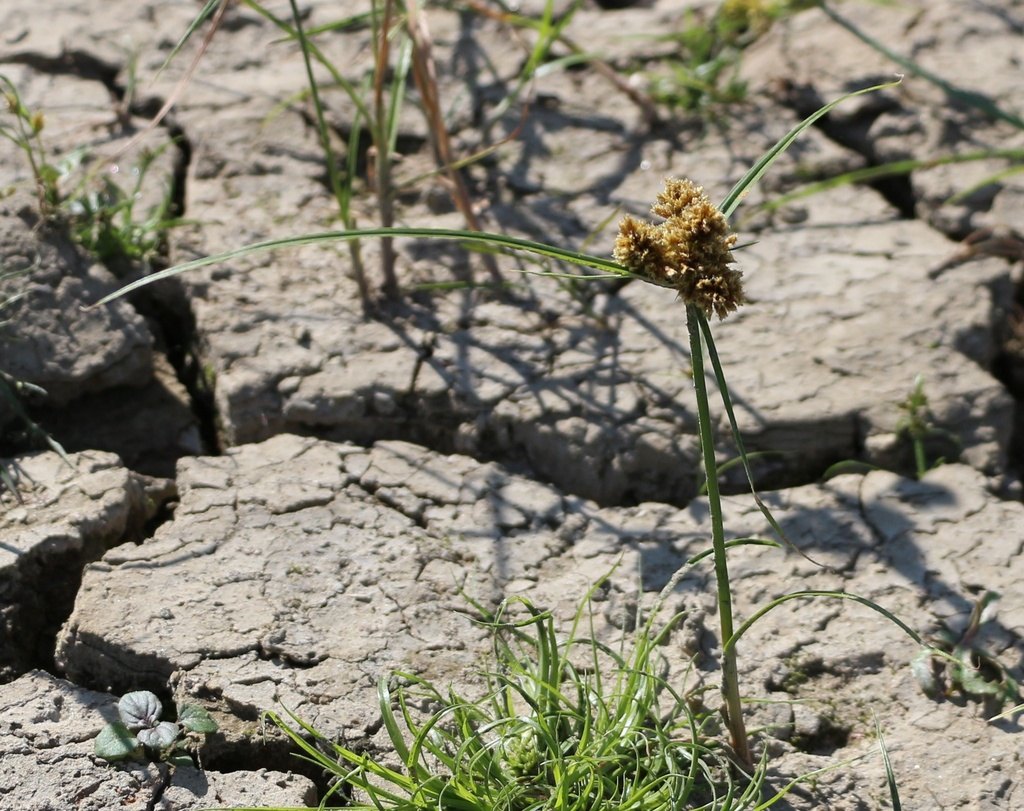
Cyperus glomeratus is an annual sedge, described by Linnaeus in 1756, with tufts of three-angled stems 30 to 90 cm tall, each topped by a head of brown spikelets 1 to 3 cm across. A fresh head looks less like a flower than a small burr stuck on the end of a stick.
Below the head sit three or four long, leaf-like bracts, longer than the inflorescence and the most conspicuous part of the plant at a distance. The true leaves are few, 4 to 8 mm wide with reddish brown sheaths, and the plant is a fresh green that turns dull straw as the seed ripens. Each head holds spikelets 5 to 10 mm long with eight to sixteen flowers.
The species is native across temperate Eurasia, from France and Italy through central Asia to Japan, and it reaches China in both the north and the south. It grows in wet places at low altitude: ditches, pond margins, rice fields, the muddy edges of slow rivers, and any hollow that holds water into June.
It is not the notorious purple nutsedge. Cyperus rotundus has underground tubers, a network of them, and it returns from them after any cultivation; this species has fibrous roots only and no tuber chain, so it is an annual weed of wet ground rather than a perennial plague of dry fields. The difference matters to anyone trying to control it.
Science & Biotechnology
The sedge inflorescence is not a simple spike. What looks like one head is a condensed anthela, a branching system in which the branches have been shortened almost to nothing, so that dozens of spikelets sit side by side on a common receptacle. Each spikelet is a two-ranked stack of scales, and each scale hides one flower.
The fruit is a small three-sided achene, dark grey and about half the length of its glume, with a netted surface, and it floats. Air spaces in the pericarp and the shape of the fruit keep it at the surface long enough to be carried downstream or across a flooded field. That is how the species reaches isolated wetlands and how it arrives in a new paddy.
The genus is one of the classic cases for studying C4 photosynthesis, because it contains both C3 and C4 species and the C4 pathway appears to have arisen several times within it. That makes Cyperus a testing ground for questions about how often, and how easily, a major metabolic innovation can evolve. The anatomy differs between the two groups in ways a hand section can show.
Uses & Benefits
In rice country it is a weed, and a serious one in wet-seeded fields where the water regime favours it as much as it favours the crop. It competes early, sets seed before the harvest, and its seed survives in the mud for years, so a single bad season seeds a field for a decade.
The stems are tough and fibrous, and in parts of Asia sedges of this kind are cut for matting, coarse rope and paper, though this species is not among the important ones. Its main economic role is negative: it is a cost in the rice budget rather than a crop in its own right.
It has a use in constructed wetlands, where sedges of several species are planted to take up nitrogen and phosphorus from polluted water. The plants are harvested and removed, and the nutrients leave with them; a stand of this species in a treatment bed is doing the same work as a stand in a ditch, only on purpose.
Growing from Seed
Seed needs light and mud. Sow it on the surface of wet compost, keep the pot standing in two centimetres of water, and give it warmth; germination is fast and often close to total. It is an easy plant to raise and a hard one to keep contained once it starts to set seed.
In a pot or a bog garden it is decorative in its own right, and a row of them along a wet margin makes a clean, architectural edge. Keep the water level constant, feed little, and pull the plants before the heads shatter if you do not want seedlings everywhere next spring. The green heads last for months before they turn straw.
Control in a paddy depends on timing: the plants must be killed before they set seed, and the seed bank must be drawn down by several years of clean cultivation. Hand-weeding is effective in small fields and futile in large ones, where the seed return is simply too high. Drainage helps, because the species is a plant of standing water and it hates a dry summer.
Our Take
It is a weed with a good silhouette, which is an awkward thing to admit. In a wet corner of the garden it looks deliberate, and the round heads catch light in a way that most ornamental sedges do not. The problem is entirely one of context. Put it in a bog garden and it is an asset; put it in a rice field and it is a bill.
Grow it in a container if you want it at all, and cut the heads before they brown. The plant’s real interest is botanical: a compact head that is a whole branching system folded into a marble, and a genus that keeps reinventing the same photosynthetic trick. Few weeds repay a close look this well.
Related Reading
If Clustered Flatsedge appeals to you, these related plants are worth a look: