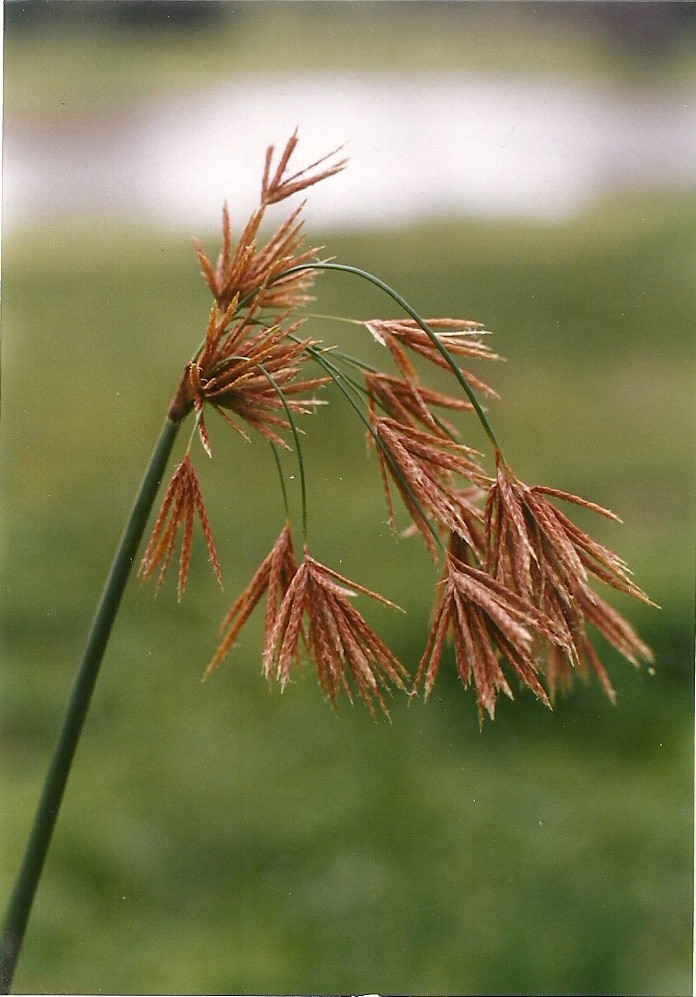
Cyperus articulatus seed

LATIN NAME: Cyperus articulatus
COMMON NAME: Jointed Flatsedge, Priprioca, Guinea Rush
The jointed flatsedge is a plant of the water’s edge, and its quiet, aromatic character has been valued for centuries. It grows as a perennial sedge, usually a metre or more tall, with smooth, round, jointed stems that look like a series of green beads threaded together, topped by neat, radiating clusters of brown flower heads. The stems are strongly aromatic, with a warm, spicy, slightly woody scent, and the underground rhizomes are even more fragrant. It is a plant of rivers, streams, lakes and swamps, and it has been used for perfume, medicine and weaving in many lands.
The jointed flatsedge belongs to the sedge family, Cyperaceae, and it is widespread across the tropics and subtropics, from Africa and southern Asia to northern Australia, the Americas and the West Indies. It grows in or near water, and it is particularly prized in parts of South America, where it is known as priprioca.
Positive & Encouraging Seed Germination Guide
Growing jointed flatsedge from seed is easy and rewarding. The small seeds sit inside the brown flower heads, and they germinate readily in warm, moist conditions, so sow them in pots of moist, loamy compost in spring, cover them lightly, and keep them warm, bright and evenly moist. Germination usually begins within two to four weeks. Pot the seedlings on as they grow and plant them out in a sunny or partly shaded spot in moist soil, or at the edge of a pond or stream, where they will thrive. The plants grow well in damp ground and will quickly form attractive, aromatic clumps.
Scientific Research & Plant Biotechnology
The jointed flatsedge has a genuine and growing place in aromatic plant research. The plant is known for the essential oil from its stems and rhizomes, which has a warm, spicy, woody scent, and researchers have studied the chemistry of this oil and its traditional uses in perfume and traditional medicine, as well as its potential antibacterial and other biological activity. In parts of South America, the plant is cultivated commercially for the perfume industry, and researchers have studied its cultivation and its oil yield. The species has also been studied in ecology for its growth in wetlands and its value in wetland ecosystems. For a plant of such fragrance and usefulness, the jointed flatsedge has a bright record of research.
Ecological & Economic Value & Wide Applications
Ecologically, the jointed flatsedge is a valuable plant of the wetlands. It grows in and beside water, helping to hold the banks of rivers and streams, its dense clumps give shelter for small animals and insects, and it is part of the natural life of ponds, lakes and swamps.
Its economic value is real and growing. The aromatic stems and rhizomes are used in the perfume industry, in traditional medicine and in weaving, and in South America the plant is cultivated commercially for its fragrant oil. For a grower, the jointed flatsedge is an easy and fragrant plant for damp ground, and for a gardener it brings a tropical, waterside character and a scent like no other.
Cyperus articulatus – Uses and Benefits
Cyperus articulatus, commonly known as jointed flatsedge, priprioca (in Brazil), or attractylis (in some herbal contexts), is a plant in the Cyperaceae (sedge) family. It grows in tropical and subtropical regions worldwide, often near rivers, wetlands, and swampy areas.
This plant is highly regarded in traditional medicine, perfumery, and spiritual practices in Africa, South America, and Asia.
1. Traditional Medicinal Uses
In many cultures, particularly in Africa, South America, and the Caribbean, Cyperus articulatus has long been used as a medicinal plant:
Common traditional uses include:
-
Sedative and calming effects
Used to treat anxiety, stress, and insomnia. -
Pain relief and anti-inflammatory
Used for headaches, joint pain, and body aches. -
Stomach and digestive issues
Helps treat indigestion, stomach cramps, and diarrhea. -
Anticonvulsant
Used in traditional medicine to treat epilepsy and seizures. -
Antimalarial properties
Used as part of herbal remedies to manage fevers and malaria in some regions.
These uses are based on ethnobotanical knowledge. Clinical validation is still limited, but some studies support its anticonvulsant, anti-inflammatory, and antioxidant properties.
2. Essential Oil and Cosmetic Uses
-
The rhizomes (roots) produce a fragrant essential oil called priprioca oil, mainly used in Brazilian perfumery and cosmetics.
-
Scent profile: Earthy, woody, spicy, slightly sweet – used in perfumes, soaps, and body care products.
-
Also used for insect-repellent and aromatherapy purposes.
3. Spiritual and Ritual Use
In Afro-Brazilian and Caribbean spiritual practices, such as Candomblé, Santería, and Obeah, the plant is:
-
Burned or brewed as part of cleansing and protection rituals
-
Used in baths and incense to ward off negative energy
-
Believed to enhance mental clarity and spiritual balance
4. Ecological Role
-
Grows in wetlands and riverbanks, helping to stabilize soil and prevent erosion.
-
Serves as part of the biodiversity of aquatic ecosystems, supporting insects and small animals.
5. Summary Table
| Category | Use / Effect |
|---|---|
| Traditional Medicine | Sedative, digestive aid, pain reliever, anticonvulsant |
| Essential Oil | Used in perfumery (priprioca), earthy/spicy scent |
| Spiritual Use | Used in cleansing rituals, protective baths, incense |
| Ecological Role | Wetland stabilizer, part of aquatic ecosystem biodiversity |