


Delphinium cultorum Seeds | Garden Delphinium
LATIN NAME: Delphinium cultorum
COMMON NAME: Garden Delphinium
Plant Profile
Delphinium cultorum is the name European seed houses use for the tall garden delphinium, the one with spikes of blue florets a metre and a half high. It is not a wild species. It is a hybrid group built in the nineteenth century from Delphinium elatum and a handful of relatives, and the name is a convenience rather than a rank.
The group is often sold as Elatum hybrids, and the parentage is genuinely complicated. Delphinium elatum, a Siberian and European species with a tall spike and a hollow stem, supplied the architecture. Delphinium cheilanthum and D. formosum, from the Caucasus, supplied flower size and the deep blues. Breeders in Nancy and in England did the rest.
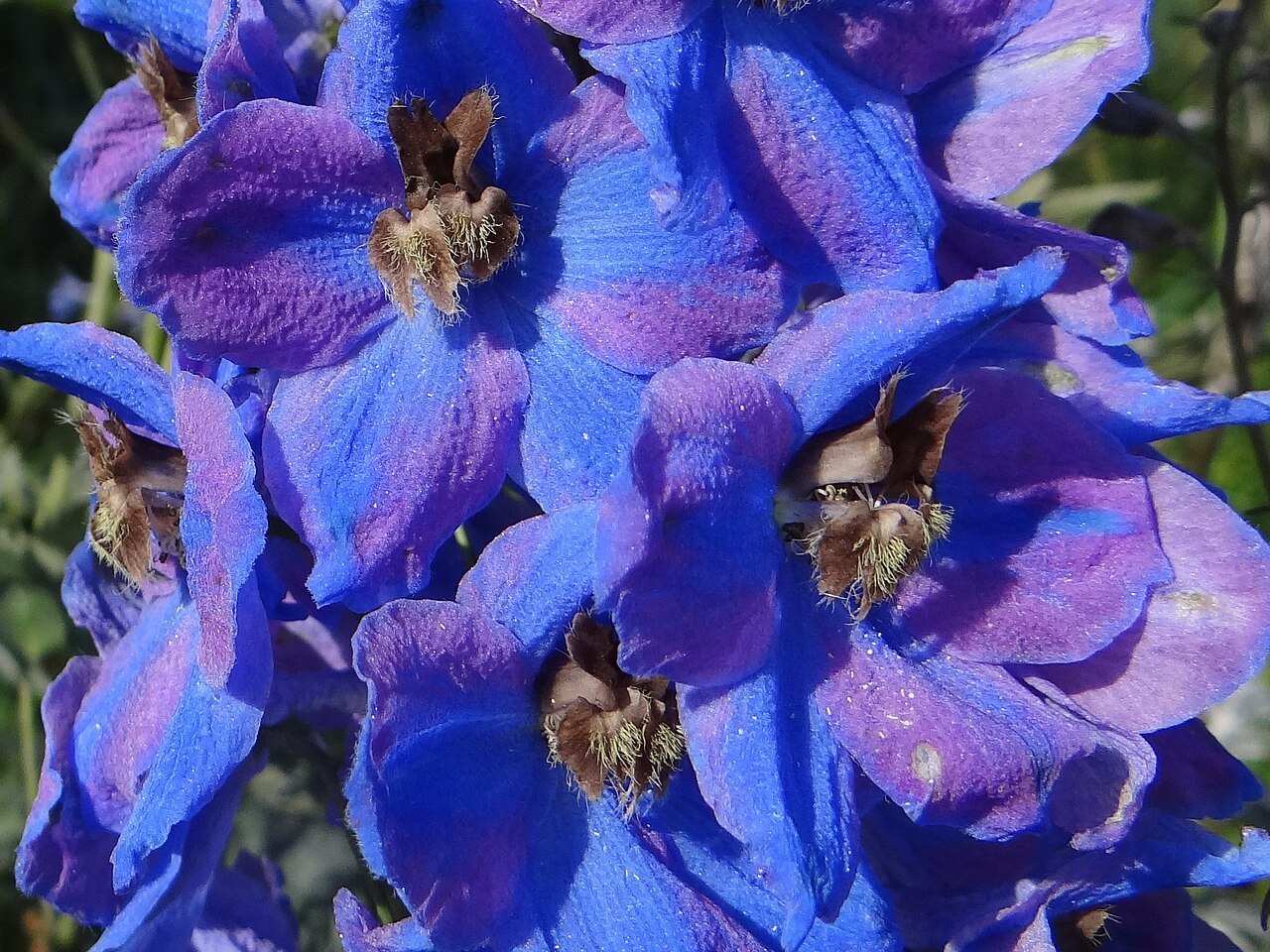
A modern cultivar is a plant of contradictions: enormous, brittle, and dependent on support. Stems rise from a crown of palmate leaves and carry forty or more florets, each with a long spur behind the petals. Double forms exist and are heavier still. A single spike in full flower is one of the largest flowers in the temperate garden.
The plant is a perennial in cool climates and an annual in warm ones, where the crown cannot survive a hot wet summer. It wants a cold winter, a moist spring and a summer that does not sit above thirty degrees for long. That describes Britain, Scandinavia, the Alps and the northern United States, and it describes very little else.
Science & Biotechnology
The flower is built for bumblebees and built to prevent self-pollination. The two upper petals form a spur that reaches back into the sepal spur and holds nectar, and the anthers ripen before the stigmas become receptive. A bee working up the spike delivers pollen from a younger flower to an older one. The geometry is easy to watch.
The whole family is defended by diterpene alkaloids, and delphinium makes some of the strongest. Methyllycaconitine binds to nicotinic receptors and paralyses the nervous system, and cattle that graze larkspur on mountain pasture stagger and die. Gardeners handle the plants without harm, but the seed and the young shoots are not a salad.
Breeding has pushed the group far from its parents. Modern strains are selected for stem stiffness, for colour that does not fade to mauve, and for a centre petal that stays closed, which keeps rain out of the flower. Triploid and tetraploid forms exist and are sterile or nearly so, so some cultivars are propagated by cuttings rather than seed. Near kin on the list are Delphinium blue, Delphinium grandiflorum and Nigella sativa, all Ranunculaceae.
Uses & Benefits
It is a cut flower of the old school, and it needs handling. Stems are cut when the lowest three florets are open and the rest are in bud, and the ends are seared or stood in deep water. A spike lasts five days, not two weeks. In the border the same spike is magnificent for ten days and then needs cutting to the ground.
Cutting the first flush back to a low leaf joint in July produces a second, shorter spike in September in cool climates. That is standard practice in British gardens and it is worth the trouble. Without it the plant sets seed, weakens, and shortens its life. With it, a clump can last five years or more.
The plant is poisonous to livestock and should not be planted where cattle or horses can reach it. In the garden it is safe enough, though gloves are sensible when handling cut stems. It has no culinary use and no medicinal use that anyone should attempt. Its value is entirely in the spike, and the spike is enough.
Growing from Seed
Sow in late winter at fifteen to eighteen degrees, on the surface of a fine mix and barely covered, because light helps. Germination takes two to four weeks. Fresh seed germinates far better than stored seed, and seed more than a year old may give ten per cent. Order it in winter and sow it as soon as it arrives.
Grow the seedlings cool and bright, prick them out into deep pots, and plant out after hardening in spring, setting the crown just at soil level. Space them fifty centimetres apart and stake early, before the stems need it. A circle of wire netting at forty centimetres is better than a single cane, because the spike is heavy.
Water deeply and mulch to keep the roots cool, and feed once in spring. Watch for slugs at emergence, for powdery mildew in dry summers, and for a bacterial blotch that starts as wet black spots on the leaves and cannot be cured. Remove affected leaves at once. Divide clumps every four years, in early spring.
Our Take
The garden delphinium is a nineteenth-century object that has survived because nothing else occupies its place. The spike is too big, too blue and too fragile to be sensible, and every gardener who grows it knows that. It is also the plant that people stop at from the other end of a border. Sense has little to do with it.
Grow it where summers are cool and winters are cold, stake it properly, and cut it back after the first flush. If you garden somewhere hot, grow it as an annual and enjoy one season. Either way, the name Delphinium cultorum on the packet means the tall hybrid group, and that is what you will get.
Related Reading
Gardeners who grow Garden Delphinium often pair it with these related subjects: