


Penstemon barbatus Seeds | Firecracker Penstemon
LATIN NAME: Penstemon barbatus
COMMON NAME: Firecracker Penstemon
Plant Profile
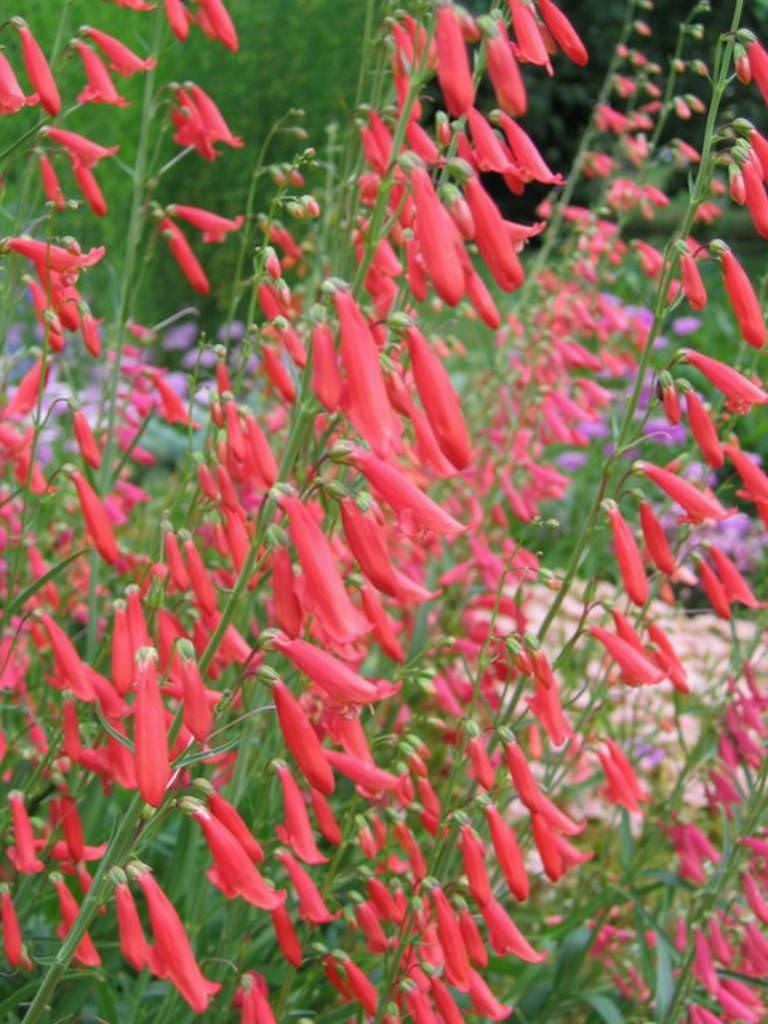
Firecracker penstemon is a short-lived perennial of the dry hills of the western United States, growing sixty to a hundred and twenty centimetres with a basal rosette of smooth, grey-green leaves and upright stems carrying long, tubular, scarlet flowers through early summer. The flowers are two-lipped, with a narrow tube that opens into five lobes, and they are perfectly shaped for a hummingbird’s tongue. The plant blooms for weeks, sets seed and often dies after two or three seasons, but it self-sows freely where the ground is open. It grows on rocky slopes, in canyon bottoms and along roadsides from Colorado to Arizona and northern Mexico, where it tolerates heat, drought and poor soil. It is one of the best plants for a dry garden in a cold climate, and one of the most reliable hummingbird plants.
Science & Biotechnology
Penstemon barbatus is a member of the Plantaginaceae, the family that absorbed the old Scrophulariaceae on molecular evidence, and it sits in a genus of about two hundred and fifty species centred on western North America. The genus is a classic example of adaptive radiation in flower shape: species with wide flowers are pollinated by bees, while the narrow-tubed red ones, like this, are pollinated by hummingbirds, and the transition between the two forms has been studied as a model of pollinator-driven speciation. The species is diploid and hybridises with relatives where ranges overlap, which is why garden penstemons are so variable. It is drought-tolerant but short-lived, and it is susceptible to root rot in wet soil. Its seed is small and germinates readily after cold stratification.
Uses & Benefits
The plant is grown in dry gardens, rock gardens and xeriscapes for its scarlet flowers and its hummingbird visitors, and it is one of the best penstemons for a cold, dry site. It is also used in restoration seeding on disturbed ground in the Intermountain West. The flowers are good for cutting. It has no culinary use and is not used medicinally in modern practice, though related species were used by Native American groups for toothache and for wounds. In the garden it needs full sun, sharp drainage and lean soil, and it should be watered only to establish. It is short-lived, so allow it to self-sow, and cut the flowering stems back after the first flush to encourage a second.
Growing from Seed
Sow the seed in autumn or early spring, surface-sowing on a gritty mix and covering with a bare millimetre of grit, since light aids germination. Stratify at four degrees for four to six weeks if sowing in spring. Germination takes two to four weeks at eighteen degrees. The seedlings are small and should be grown on in deep cells, since they resent disturbance. Plant out into gravelly or sandy soil in full sun, and water only in the first summer. Do not enrich the soil or mulch heavily, which rots the crown. Allow some plants to set seed for the next generation, and cut back the spent stems to encourage a second flush.
Our Take
A scarlet penstemon built for hummingbirds and dry hills, and short-lived by design. Let it seed itself and it never leaves.
Related Reading
Readers interested in Firecracker Penstemon frequently explore these as well: