


Nolina matapensis Seeds | Nolina
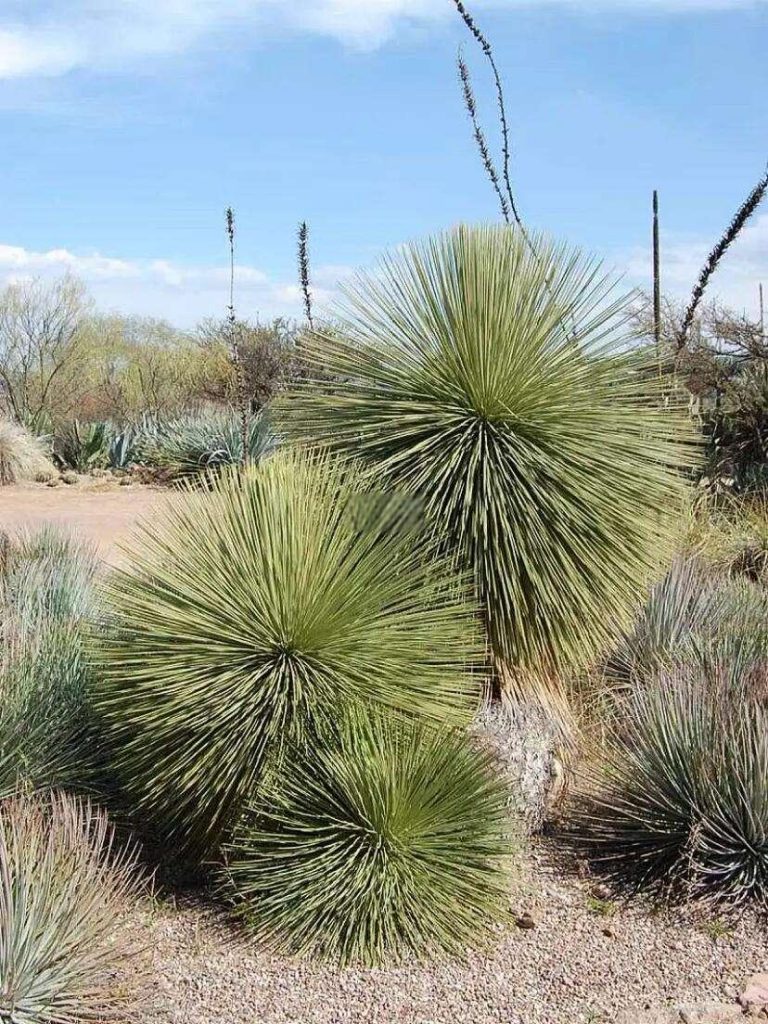
LATIN NAME: Nolina matapensis
COMMON NAME: Nolina, Matapa Nolina
Plant Profile
Matapa nolina is a slow-growing desert plant of northeastern Mexico, forming a stout trunk one to two metres tall topped by a dense head of long, narrow, grey-green leaves that arch outward and droop at the tips. It looks like a small palm or a grass tree, but it is neither: it belongs to the same group as the yuccas and the beargrass, and like them it is dioecious, with male and female plants producing separate flower spikes. The inflorescence is a tall, narrow panicle of tiny cream flowers that rises above the head in summer. It grows on dry, rocky slopes in Sonora and Chihuahua, where it tolerates heat, drought and poor soil, and it is one of the most architectural plants for a desert garden.
Science & Biotechnology
Nolina belongs to the Nolinaceae, the group of rosette-forming monocots in the Asparagaceae that also includes Dasylirion and Beaucarnea, and the genus is being revised as molecular work clarifies its relationships. The species is dioecious, and the male and female inflorescences differ in the way the flowers are arranged, which is one of the characters used to separate species in the genus. Its leaves have a thick cuticle and sunken stomata, and the plant stores water in the base of the leaves and in the trunk, which allows it to survive months without rain. The trunk is formed from the persistent bases of old leaves, and it is slow: a metre of trunk may take forty years. Its seed is small and winged, and it is dispersed by wind and water.
Uses & Benefits
The plant is grown as an architectural specimen in dry gardens, in large containers and in gravel plantings, where its trunk and its fountain of leaves make a strong vertical accent. It is also used in commercial landscaping in warm, dry climates, where it needs no irrigation once established. The leaves have been used for thatching and for weaving in Mexico, and the trunk for small construction. It is not a plant for a small garden or for rich, wet soil, and it is very slow, so large specimens are expensive and should be bought from cultivated stock rather than dug from the wild. Sun, fast drainage and space for that leaf span are the whole of its requirements.
Growing from Seed
Fill deep tubes with a mixture of coarse grit, sand and sieved loam, and press one seed into each, a centimetre below the surface. Warmth matters more than light at first: hold the tubes at twenty-eight degrees and keep them barely moist. Seedlings appear over a month or more, and the first leaf is a single strap that looks nothing like the adult plant. Leave it in the tube for two seasons, since the taproot must run straight. Set it out on a raised mound of gravel and loam in full sun, water it once and then leave the hose off. Frost to minus eight is bearable if the crown stays dry.
Our Take
A Mexican desert rosette on a slow trunk, built from old leaf bases. Full sun, gravel, and forty years to a metre.
Related Reading
Gardeners who grow Nolina often pair it with these related subjects: