


Portulaca quadrifida Seeds | Chickenweed
LATIN NAME: Portulaca quadrifida
COMMON NAME: Chickenweed
Plant Profile
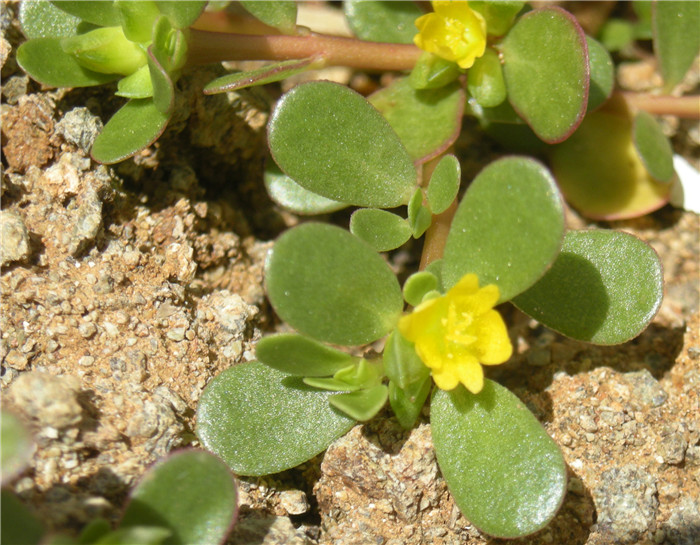
Chickenweed is a prostrate succulent of the purslane family, spread across the tropics and subtropics as a weed of paths, courtyards and bare ground. Its stems creep along the soil and root at the nodes, carrying small, fleshy, oval leaves and, in warm weather, tiny flowers with four petals, usually yellow or orange, that open for a few hours in the morning. The plant never grows tall, rarely exceeding ten centimetres, but it can cover a square metre in a season. It stores water in its leaves and stems, which is how it survives on paving and in cracked earth, and it sets seed prolifically in small capsules that open when wet. It is edible, and in parts of Asia it is gathered as a pot herb.
Science & Biotechnology
Portulaca quadrifida is a pantropical weed whose success rests on a combination of CAM photosynthesis, prostrate growth that escapes mowing and grazing, and abundant seed production. Like other purslanes it can switch between CAM and C3 photosynthesis depending on water supply, which allows it to keep growing through dry spells that stop other herbs. The seed is tiny and long-lived, and it germinates after rain in a matter of days. The species is a host for nematodes and for some crop viruses, which is part of why it is unwelcome in vegetable gardens. Its leaves are rich in omega-3 fatty acids, in vitamin C and in mucilage, and nutritional surveys in India and West Africa have proposed it as a famine food and a source of minerals. It is also used in traditional medicine as a cooling diuretic.
Uses & Benefits
The leaves and young stems are eaten raw in salads or cooked as a pot herb, with a slightly sour, mucilaginous texture that thickens soups. In Asian and African markets it is sold in bunches in the rainy season. Medicinally it is used as a poultice for skin inflammation and as a cooling tea for fevers, and the seed is sometimes ground into flour. In the garden it is a weed to most people, but it can be grown deliberately as a living mulch or a ground cover in a hot, dry site, where it suppresses other weeds and needs no water. It is also a useful plant for a chicken run, since poultry eat it eagerly, which is where the common name comes from. It should not be allowed near vegetable beds.
Growing from Seed
Sow the seed broadcast on bare, warm soil in late spring, and water once. Germination takes three to seven days at twenty-five degrees, and the plants grow fast. They need full sun and poor to moderate soil; rich soil produces lush growth and few flowers. Water only in long dry spells, since the plant is drought-tolerant and resents wet feet. It self-sows freely, so one sowing is usually enough. To keep it tidy, cut the stems back with shears and remove the trimmings. Harvest the leaves young, before flowering, for the kitchen. In cold climates it dies at the first frost and returns from seed the following year.
Our Take
A pantropical weed that is also a pot herb and a living mulch. Grow it on purpose, or spend the summer pulling it out.
Related Reading
If Chickenweed appeals to you, these related plants are worth a look: