


Horwoodia dicksoniae Seeds | Khozama Plant
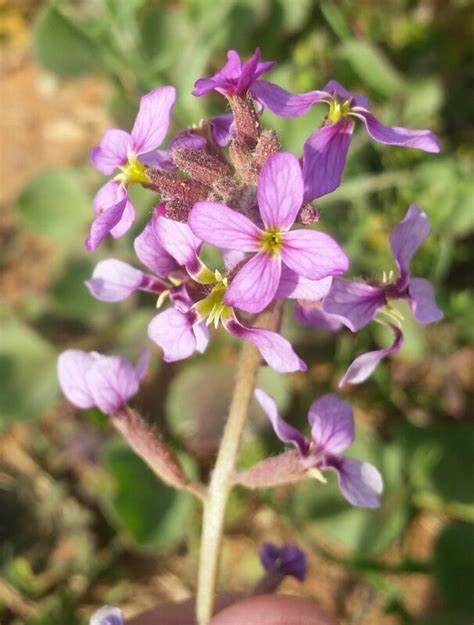
LATIN NAME: Horwoodia dicksoniae
COMMON NAME: Khozama
Plant Profile
Khozama is a small annual of the mustard family from the deserts of the Arabian Peninsula, Iraq and Kuwait, growing ten to thirty centimetres in a loose, branching tuft. Its leaves are divided into narrow lobes and covered with fine hairs, which gives the plant a grey-green cast and helps it survive in sand. In spring, after rain, it produces small four-petalled flowers in pink, lilac or white, and these are followed by flat, round seed pods. The whole plant has a pleasant, spicy scent, which is the source of its Arabic name and the reason it is gathered. It completes its life cycle in a few months and survives the rest of the year as seed in the sand, germinating only after sufficient winter rain.
Science & Biotechnology
Horwoodia dicksoniae is a monotypic genus, the only species in its group, and it belongs to the tribe Anastaticeae of the Brassicaceae, a tribe centred on the deserts of southwestern Asia. Its closest relatives are also annual desert herbs, and the group is studied for the adaptations that allow plants to survive on less than a hundred millimetres of rain a year: rapid germination, a short life cycle, and seed coats that inhibit germination until enough water has fallen. The plant’s chemistry has been surveyed for glucosinolates, the mustard oils characteristic of the family, and for flavonoids, and the essential oil of the flowering tops has shown antimicrobial activity in vitro. Like many desert annuals, its populations fluctuate enormously between years, and a species that is abundant in one spring may be absent for the next five.
Uses & Benefits
The plant is used in the Arabian Peninsula as a fragrant herb, added to tea and to rice, and the dried flowers are kept with clothes for their scent. It is also grazed by camels and sheep in the brief spring flush, when the desert turns green for a few weeks. In traditional medicine the seeds are used as a warming stimulant and for digestive complaints. In the garden it is a curiosity for a dry, sandy bed in a Mediterranean climate, where it will germinate after winter rain and flower within weeks. It needs no irrigation and no feeding, and it should be allowed to set seed and self-sow. It is not a plant for a rich border, and it will not survive a wet summer.
Growing from Seed
Sow in autumn, before the winter rains, in pure sand or a very gritty mix with a little loam. Press the seed into the surface and water once; the seed needs cool temperatures and moisture to break dormancy. Germination takes one to three weeks at ten to fifteen degrees. Do not prick out, since the plant resents disturbance: sow direct where it is to flower. Keep the seedlings in full sun and water only enough to keep them going, since excess water rots the crown. Let the plants set seed and then die back naturally; the seed will persist in the sand and germinate the following winter. Never irrigate the bed in summer.
Our Take
A scented desert annual that appears for a few weeks after rain and then vanishes into seed. Dry sand, winter water, no summer care.
Related Reading
If Khozama appeals to you, these related plants are worth a look: