


Erigeron breviscapus Seeds | Shortscape Fleabane
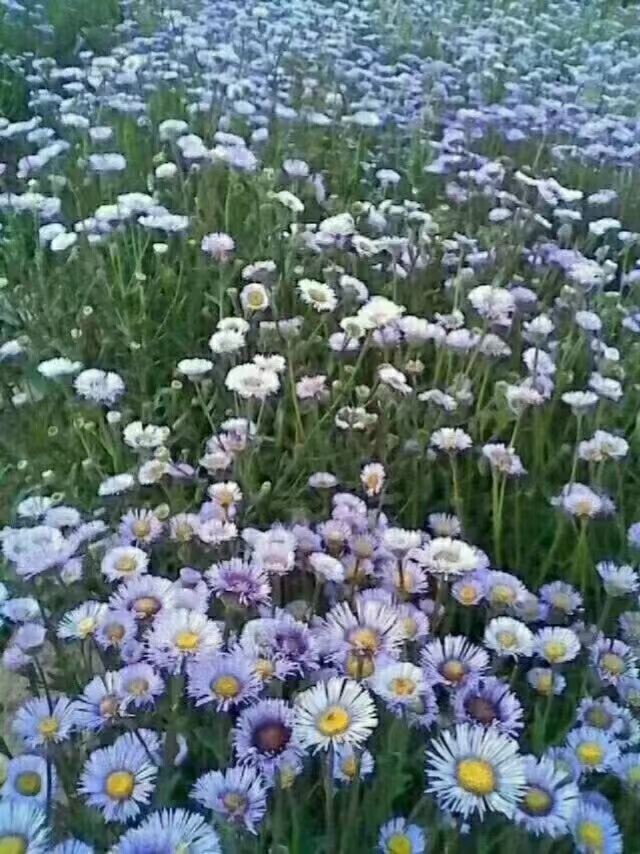
LATIN NAME: Erigeron breviscapus
COMMON NAME: Shortscape Fleabane
Plant Profile
Shortscape fleabane is a small perennial daisy of the highlands of Yunnan and Sichuan, growing ten to thirty centimetres from a woody rootstock. Its leaves form a flat rosette close to the ground, spoon-shaped and slightly hairy, and in summer it sends up short stems carrying a single flower head with narrow, purple-blue ray florets around a yellow centre. The plant grows on open grassy slopes, in scree and on roadsides at two to three thousand metres, often in colonies, and it flowers over a long period. It is the source of breviscapine, a flavonoid extract used in Chinese medicine for stroke and for poor circulation, and it has been collected so heavily that wild stands near cities have collapsed. It is now cultivated in Yunnan.
Science & Biotechnology
The active compound is scutellarin, a flavone glycoside that is concentrated in the leaves and flowers, and breviscapine, the purified extract, is licensed in China for cerebrovascular disease and for diabetic complications. It is one of the few cases of a wild Chinese herb becoming a mainstream prescription product, and the demand drove a wave of collection that stripped populations across Yunnan in the 1990s. Cultivation began in the 2000s, and agronomic work has focused on harvest timing, since scutellarin content peaks at flowering. The species is variable in chemistry across its range, with some populations producing far more scutellarin than others, which matters for a crop grown for extraction. Pharmacological studies report vasodilatory, antiplatelet and neuroprotective effects, and clinical trials in China have been numerous but are generally small.
Uses & Benefits
The dried whole plant is used in Chinese medicine, usually as an extract or an injection, for stroke recovery, for angina and for dizziness, and it is one of the better-studied herbs of the region. In the garden it is a charming small plant for a rock garden, a gravel trough or the front of a dry border, where its flat rosettes and purple daisies reward close attention. It needs full sun, sharp drainage and poor soil, and it flowers best in a cool, bright summer. It is not a culinary herb. Because wild collection has been so damaging, gardeners should buy seed or plants from cultivated stock, and the species is a good example of how a garden plant can take pressure off a wild resource.
Growing from Seed
Sow the fine seed on the surface of a gritty mix in spring, press it in and cover with a bare millimetre of sand, since light helps germination. Keep at eighteen to twenty degrees with steady moisture; germination takes two to four weeks. The seedlings are small and slow, and they should be pricked out into individual pots once they have four leaves. Move the young plants into full sun and a gritty mix that drains at once. Plant out into a rock garden, a gravel bed or a trough with poor, alkaline soil. Water sparingly, and do not feed, which makes the plants soft and short-lived. Divide the clumps every three years, and deadhead to prolong flowering.
Our Take
A small Yunnan daisy that became a stroke drug, and a plant for a gravel trough. Buy cultivated stock, not wild roots.
Related Reading
If Shortscape Fleabane appeals to you, these related plants are worth a look: