


Linum perenne Seeds | Blue Flax
LATIN NAME: Linum perenne
COMMON NAME: Blue Flax
Plant Profile
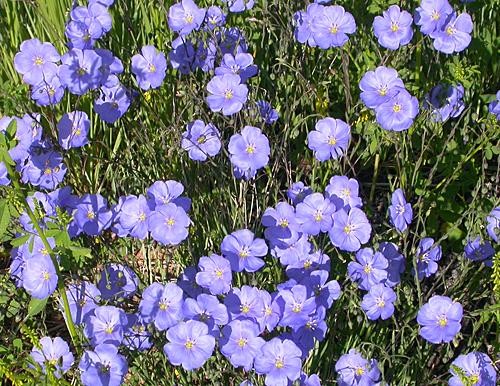
Blue Flax (Linum perenne) is a wiry, graceful perennial of the flax family (Linaceae), native to the dry grasslands of Europe and western Asia. It grows 30-60 cm tall, with narrow, blue-green leaves and a succession of sky-blue, five-petalled flowers that open in the morning and drop by afternoon, replaced day after day through summer. Its delicate appearance belies a tough, drought-tolerant nature.
Science & Biotechnology
Seed science, comparative botany and horticultural selection all touch on Linum perenne, a representative of the Linum group with clear practical value. As a close relative of fibre and oilseed crop Linum usitatissimum, it has also drawn some comparative genetic interest from researchers studying the wider Linum genus’s diversity between ornamental and agriculturally significant species. In the laboratory and trial ground alike, it serves as workable material for propagation research and line selection.
Uses & Benefits
Beyond its ornamental appeal, Blue Flax has the practical versatility that makes a plant worth growing from seed year after year. Blue flax is a graceful, airy addition to prairie-style and drought-tolerant borders, its constant cycle of fresh morning-opening blue flowers providing a genuinely dynamic, ever-renewing display throughout its long summer flowering period. Its fine, delicate texture also makes it a useful softening element planted among bolder, more substantial perennials. Mature plants need little attention in a well-chosen position.
Flax is a double gift: linen fiber and linseed, the richest common plant source of omega-3 ALA and lignans, with ground flaxseed studied for cholesterol, digestive and hormonal support. It is one of humanity’s oldest crops and still one of its most functional foods.
Growing from Seed
Starting Blue Flax from seed is simple and satisfying. Sow seed directly into a loose, well-drained mix at a shallow depth, keeping it lightly moist until germination. Full sun suits this drought-tolerant perennial well, and once established it typically self-seeds readily, often naturalising into a soft, airy colony over successive seasons. Sow evenly over the surface and cover lightly into a loose, well-drained seed compost, water in gently, and keep the sowing in full sun with steady moisture. Shift the seedlings into small pots as soon as they can be handled, and give them bright light until planting-out time.
Our Take
Blue Flax settles in quickly once it finds its footing. It tolerates the sort of small mistakes every beginner makes.
Related Reading
If Blue Flax appeals to you, these related plants are worth a look: