


Angelica keiskei Seeds | Ashitaba
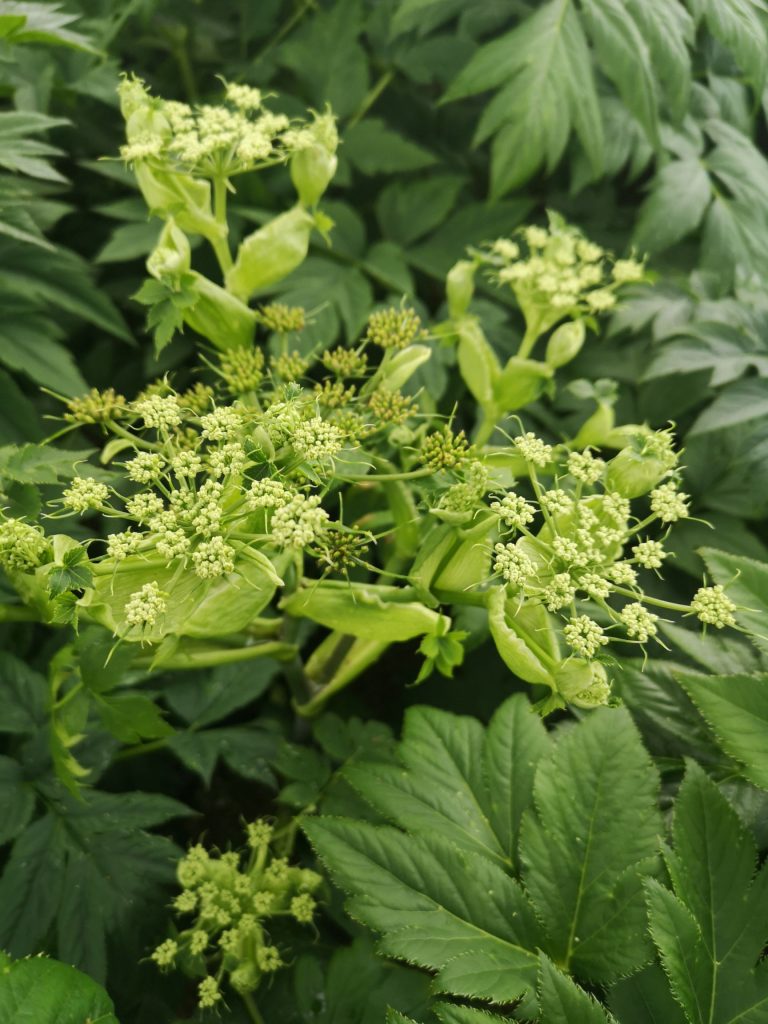
LATIN NAME: Angelica keiskei
COMMON NAME: Ashitaba, Tomorrow’s Leaf
Plant Profile
Ashitaba (Angelica keiskei) is a robust biennial or perennial herb of the carrot family (Apiaceae), native to the Pacific coast islands of Japan. It grows 50-120 cm tall, with large, glossy, divided leaves and rounded umbels of greenish-white flowers, exuding a yellow sap rich in chalcones when cut. Long eaten as a vigorous island vegetable and tonic, it is cultivated in Japan for greens, teas and supplements.
Science & Biotechnology
Research touching on Angelica keiskei ranges from the botany of the Angelica group to practical horticulture, including seed handling, propagation and the selection of superior forms. This research interest has helped drive commercial cultivation of ashitaba well beyond its originally narrow native range. Because it has been grown for so long, its garden habits are thoroughly documented.
Uses & Benefits
In the garden, Ashitaba earns its place in borders, containers and mixed plantings, and it also rewards growers who raise plants for cutting, drying or kitchen use. Its remarkably fast regrowth after cutting also makes it a genuinely practical, repeat-harvest crop for home gardeners in suitable mild climates. Routine care after establishment is refreshingly light.
Ashitaba, tomorrow’s leaf, is Japan’s famous longevity vegetable, its yellow sap rich in chalcones such as xanthoangelol, studied for metabolic effects; the leaves are eaten as a nutritious green.
Growing from Seed
Ashitaba is one of those generous plants that come along well from seed. Sow seed into a loose, well-drained, humus-rich mix and keep it consistently moist, since this species prefers cooler, moister conditions reflecting its coastal Japanese island origin. Bright, filtered light suits young seedling well, and once established, its rapid regrowth after cutting makes it an unusually rewarding repeat-harvest plant. Surface-sow onto a light, well-drained compost, dust over a thin covering, and keep evenly moist and sunny until the seedlings show. Move strong seedlings into individual pots, keep them in good light, and set them out when the weather and their size agree.
Our Take
Given the right start, Ashitaba, Tomorrow’s Leaf is a long-term garden companion. It is generous with beginners and their occasional misjudgements.
Related Reading
Continue exploring with these related plants: