


Moraea sisyrinchium Seeds | Barbary Nut Iris
LATIN NAME: Moraea sisyrinchium
COMMON NAME: Barbary Nut Iris, Annual Iris
Plant Profile
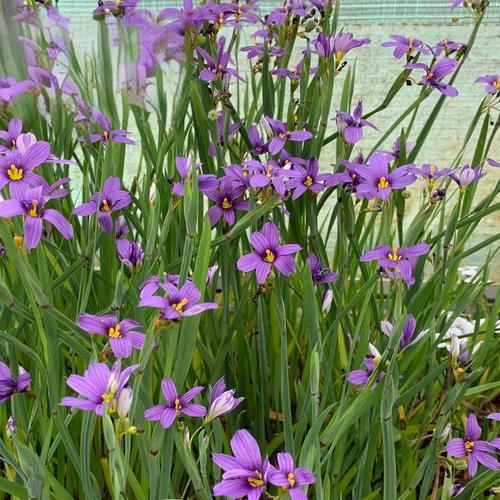
The Barbary nut is a small Mediterranean iris that opens its violet flowers for two hours in the afternoon and then closes them. It grows from Portugal and Morocco through Spain, Italy, Greece, Turkey and the Levant to Iran, on dry hillsides, in olive groves, on roadsides and in abandoned fields, flowering in March and April. The plant rises from a tunicated corm to about 30 cm, with two or three narrow, sickle-shaped leaves and a slender stem carrying two to four flowers in succession. Each flower is three to four centimetres across, pale violet to deep blue, with a white and yellow mark on the outer segments and a darker centre. The flowers open in the early afternoon and shut by late afternoon, and each lasts a single day. The seed capsule is oblong and papery, and the plant disappears underground by early summer, not to be seen again until the autumn rains.
Science & Biotechnology
Moraea sisyrinchium was long placed in Iris, and the flower still shows the family resemblance: three outer segments that function as landing platforms and three inner ones held upright. It belongs to a genus of some two hundred species, almost all of them southern African, and this is one of the few that spread north into the Mediterranean, where it behaves as a winter-growing geophyte. The corm is renewed each year above the old one, and the new corm forms during flowering, drawing on the leaves at a time when the plant looks least active. Flowering is staggered within a spike, so that a plant presents one open flower at a time and the whole display lasts a fortnight. The brief afternoon opening is tied to the hours when its bee pollinators are most active, and the flowers close immediately if the sun goes in. Seeds are shed close to the parent, and the species also multiplies by small cormlets, which is how it forms the dense colonies seen in overgrazed fields.
Uses & Benefits
The Barbary nut is grown by bulb enthusiasts and Mediterranean gardeners as a small, cheap, reliably perennial iris for a dry bank or a gravel bed, where it will seed itself into the gaps between stones. It is useful in a meadow planting that is cut in late spring, since it has finished and dried off by then, and it tolerates mowing if the cut is late. The corms have been eaten roasted in times of scarcity in North Africa, though they are small and the plant is more valuable as a marker of spring than as food. In folk medicine the corm has been used as a poultice for wounds. It is not a cut flower: the blooms last an afternoon and will not open indoors. Its main garden value is its willingness to grow in poor, stony ground with no irrigation at all, which makes it a candidate for the driest parts of a garden.
Growing from Seed
Sow seed in autumn, one centimetre deep in a gritty mix, and leave the pots outside; germination follows winter cold and is usually good. The seedlings take two to three years to reach flowering size, and they need a dry summer rest from their first year. Alternatively plant corms in autumn, five centimetres deep and ten apart, in full sun and sharply drained soil. Water through winter and spring while the plant is in growth, then stop completely once the leaves yellow, since summer water rots the corm. In a wet climate grow it in a raised bed with a gravel mulch, or in a pot under glass. Do not lift the corms every year: the species resents disturbance and settles best when left alone. Allow the colonies to spread by seed, and mow or strim in late June, after the seed has dropped.
Our Take
A small Mediterranean iris that flowers for an afternoon and then vanishes until autumn. Perfect for a dry bank that gets no water.
Related Reading
Continue exploring with these related plants: