


Oryza sativa var. glutinosa Seeds | Glutinous Rice
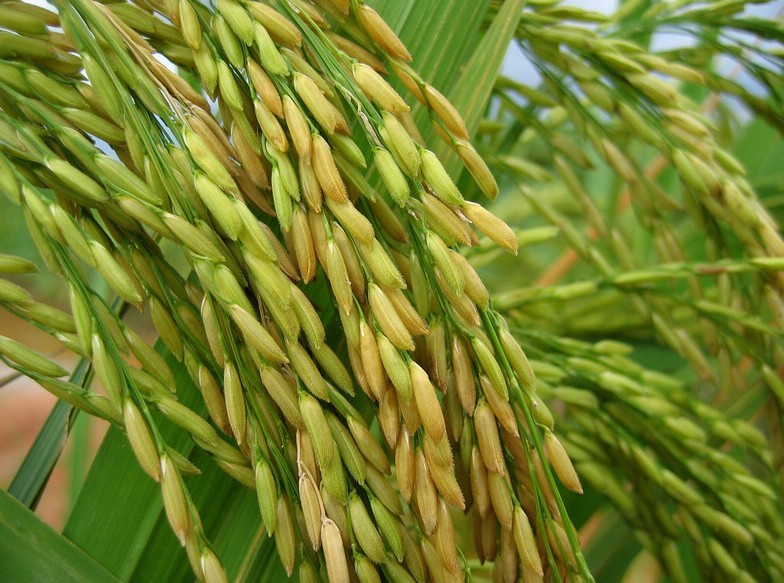
LATIN NAME: Oryza sativa var. Glutinosa
COMMON NAME: Glutinous Rice
Plant Profile
Because waxy grain is cohesive, it is shaped rather than served: soaked, drained, packed into leaves or lengths of bamboo with beans or pork, and steamed so the mass sets into one body. It is pounded while hot into a smooth dough and formed into cakes, and it is the classic brewing grain, since waxy starch saccharifies quickly under the mold Aspergillus oryzae.
The oddest use is architectural. Analysis of mortars from historic Chinese walls, pagodas and tombs has found amylopectin from cooked glutinous rice added to lime as an organic admixture; the starch modifies calcium carbonate growth and yields a tougher mortar than lime alone.
Sticky rice is grown like any paddy rice, and the differences lie in handling rather than agronomy. Water, weed control and nitrogen timing decide the crop far more than the waxy allele does.
Waxy cultivars can be heavy-headed and a lodged crop is hard to harvest, so keep nitrogen moderate, hold plant density up and avoid deep water on windy sites.
Rice blast, caused by Magnaporthe oryzae, is the disease to watch where nights are cool and the canopy stays wet; bacterial blight follows flooding and injury. Yellow stem borer tunnels into the tillers, and brown planthopper builds up in dense, heavily fertilised stands.
Science & Biotechnology
Taxonomically there is nothing to separate sticky rice from the rest of Oryza sativa. It is a cultivar group, defined by the same loss-of-function mutation appearing in different rice lineages, because growers kept reselecting the waxy type wherever a soft, cohesive grain was wanted. The plant is an ordinary paddy rice: a tillering grass with long narrow leaves, a nodding panicle of small spikelets, and a hull that encloses the grain until milling.
Amylose is the linear fraction of starch, and in rice it is assembled by granule-bound starch synthase I, the enzyme encoded at the Waxy locus on chromosome 6. Cultivated rices carry different alleles of that gene: the alleles of tropical rices give the highest amylose, those typical of temperate japonica give an intermediate figure, and the waxy allele is a null that leaves the enzyme inactive. With the enzyme gone the grain fills with amylopectin alone — chemically a highly branched molecule, and physically the reason the cooked grain is soft, glossy and adhesive.
The popcorn-like aroma of fragrant rice comes from 2-acetyl-1-pyrroline, a volatile that accumulates when a fatty-acid-degrading enzyme is switched off by a mutation of its own. Several waxy landraces carry both traits at once, and that combination is why certain glutinous types are reserved for festive dishes rather than everyday eating.
Uses & Benefits
Milled glutinous kernels look milky rather than glassy, because light scatters inside an endosperm packed almost entirely with amylopectin. The grains are shorter and plumper than the long-grain rices grown for pilafs, and cooked grains lose their shape easily, which is what the cuisine wants.
Growing from Seed
Glutinous landraces are grown in two systems. In the paddy they follow the usual transplanting routine under standing water. On the slopes of mainland Southeast Asia and in the hills of Yunnan, upland glutinous types are sown into moist soil without flooding and harvested by hand, a farming pattern that has kept many local waxy varieties in cultivation.
Waxy starch swells and gelatinises readily in hot water, and its pastes are clearer than those of ordinary rice flour. They also retrograde slowly: the hardening that makes bread stale is driven mainly by amylose, so a waxy paste stays soft as it cools rather than turning grainy.
Our Take
For contrast in the same paddy, try a pigmented black rice or a red-skinned red rice, which behave like ordinary rice in the field and differently in the pot. If you garden without flooding, upland rice is the practical entry point, and for aroma rather than texture jasmine rice is the benchmark.
Related Reading
More species in the same orbit as Glutinous Rice: