


Oryza sativa Seeds | Red Rice
LATIN NAME: Oryza sativa
COMMON NAME: Red Rice
Plant Profile
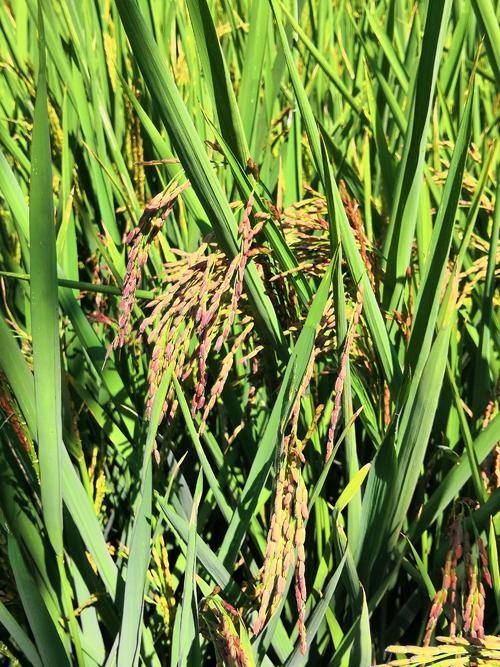
Red Rice is a cultivated rice with a red pericarp, a landrace rather than a separate species, grown for centuries in Asia and now sold as a wholegrain speciality. The plant is an upright annual grass, a metre to a metre and a half tall, with drooping panicles that turn from green to rust as they ripen.
It is grown in paddies and, in some forms, as an upland crop on dry terraces, and it needs heat and water in roughly equal measure. The red colour comes from proanthocyanidins in the bran layer, which is why the grain must be milled lightly or not at all to keep its character.
Science & Biotechnology
Rice genetics has moved fast since the genome was published in 2005, and the red pericarp is now understood at the level of a single locus: a mutation in the Rc gene, which controls proanthocyanidin synthesis, is what makes most modern rice white. Red landraces retain the functional allele.
That same allele is a problem in the field. Weedy red rice carries the wild-type gene, shatters its seed and mimics the crop, and it is one of the most serious weeds of rice worldwide, difficult to separate from cultivated grain because the two are the same species. Research on red rice therefore runs in two directions at once, agronomy and nutrition.
Uses & Benefits
The grain is eaten as a wholegrain, usually soaked and cooked longer than white rice, and it has a firm texture and a nutty flavour. In parts of southern India and Sri Lanka it is the base of traditional dishes, and red rice flour is used for breads and snacks.
Nutritionally the bran carries anthocyanins and proanthocyanidins, gamma-oryzanol and vitamin E, and red rice has been studied as part of wholegrain diets for cardiovascular risk. As a garden plant it is grown for the colour of its panicles and for seed-saving, and it makes a fine subject for a school project on inheritance. The straw is used for thatch and fodder in its home regions, and the bran for oil.
Growing from Seed
Soak the seed for twenty-four hours, then sow into wet compost at twenty-five to thirty degrees. Germination is fast, three to seven days, and the seedlings can be transplanted into a paddy or a large pot of standing water once they are fifteen centimetres tall.
Rice wants heat, sun and continuous water until the panicles begin to colour, after which the ground can dry down for harvest. In a temperate garden it needs a greenhouse or a warm summer; in the tropics it is direct-sown. Save seed from the earliest, best-filled panicles to keep the line true. Keep the water level steady, since sudden draining stresses the crop.
Our Take
A crop with a colour and a history, easy enough to grow in a bucket and interesting enough to keep a plant breeder busy. Heat and water are the whole recipe.
Related Reading
If Red Rice appeals to you, these related plants are worth a look: