


Camellia sinensis Seeds | Pu-erh Tea
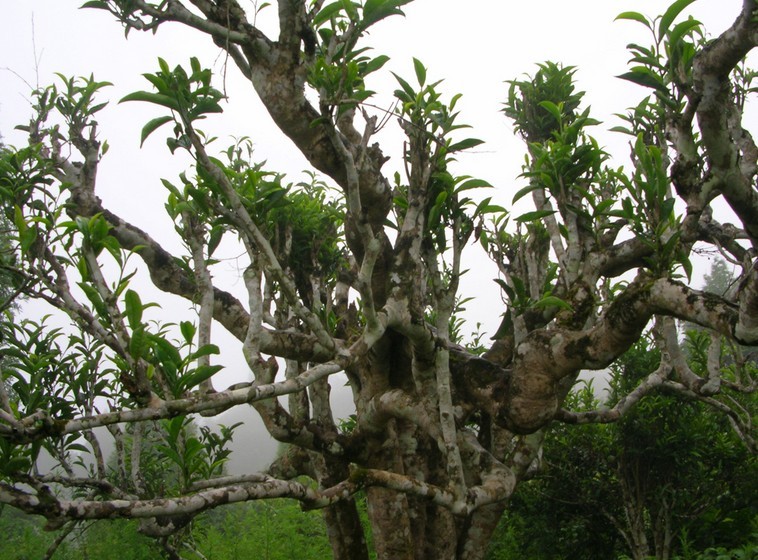
LATIN NAME: Camellia sinensis
COMMON NAME: Tea Plant
Plant Profile
The tea bush manufactures a stimulant and a relaxant in the same leaf. Caffeine, the familiar purine alkaloid, accumulates in the young shoot as a defence against insects and gives the drink its lift; L-theanine, an amino acid found almost nowhere else in quantity, gives it the savoury body and the calm that drinkers describe alongside the alertness. The proportion of the two in the picked bud is set by shading, by cultivar and by which leaves go into the basket.
Two cultivated varieties of the same species carry the world trade. Var. sinensis is the small-leaved, cold-hardy bush of China and the eastern Himalaya, grown on terraces at altitude; var. assamica is the broad-leaved tree of the warm, wet lowlands, taken into plantation cultivation in Assam in the nineteenth century. Yunnan’s tea landraces, including the large trees of the old forests, sit at the meeting point of the two and are the raw material of pressed and aged cakes.
The pressed teas of Yunnan divide into an aged raw style and a pile-fermented ripe style, and only the second is a controlled fermentation. In the ripe process, leaf is heaped, dampened and turned while a mixed community of moulds and bacteria works through the pile, darkening the leaf and softening its bitterness. Aspergillus species are prominent in those heaps, and the character of a batch depends on how the pile is watered, turned and finished.
Some of the tea that goes into these cakes comes from forests rather than gardens. Around Jingmai Mountain in Pu’er prefecture, tea trees grow under a canopy of taller forest species in a system maintained by local communities for centuries, and the landscape was inscribed on the World Heritage list in 2023. The same hills supplied the caravans that carried pressed tea north along the old tea-horse route to Tibet and beyond.
Science & Biotechnology
Reference genomes have been assembled for both the small-leaved and the Assam varieties in the past decade, and they have been used to trace how the pathways for caffeine and the catechins are wired. The most striking application is the attempt to remove caffeine at source: silencing the enzyme that carries out the final methylation step in the leaf gives a plant that still makes the flavour compounds while leaving the stimulant behind.
Caffeine is built in the young leaf through a short series of methylations, and the last of them is carried out by a caffeine synthase. Because the enzyme is well characterised, tea is one of the few crops where a single-gene route to a decaffeinated plant has been demonstrated experimentally. The same biochemistry explains why buds are richer in caffeine than old leaves, and why the picking standard matters to the cup.
Tea seed has a use far from the cup. The seed cake left after oil pressing is rich in saponins, and it was traditionally used to stupefy fish in ponds, to wash hair, and as a molluscicide in rice paddies. Those saponins are why the cake is not fed to stock without care, and the same compounds are now studied as a natural control for snails that carry schistosome parasites.
Uses & Benefits
Tea leaves are alternate, leathery and finely toothed, with the lateral veins running out to each tooth, and the apex tapers into a narrow point. The flowers are small, white, five-petalled and scented, borne in the leaf axils in autumn, and the fruit is a three-celled capsule holding round brown seeds. The plant is largely self-incompatible and outcrossing, which is why a bush grown from seed is a genetic individual and why the commercial trade is built on clonal cultivars instead.
Growing from Seed
Sow a handful of tea seeds and you will raise a row of slightly different bushes, each with its own leaf size, flush timing and flavour. That variability is the reason tea gardens replant with rooted cuttings from selected bushes, and the reason a seed-raised plant is interesting rather than inferior: it is a chance seedling with its own character, closer to the village tea of the hills than to a plantation row.
Tea wants an acid medium, and it wants it loose. Mix two parts lime-free loam, one part leaf mould or peat, and one part coarse sand, and sow the seeds, which are large and round, about two centimetres deep with the eye sideways. Keep the flat shaded and moist but never sodden; a cold, wet flat is the main cause of failure with tea seed.
Young plants grow best under light shade, in the dappled conditions of their native hills. Once the bush is established, cut it back to a low frame in its second season to force branching, and thereafter keep the picking surface level by plucking the bud and the two leaves below it. An annual feed of an acid-loving fertiliser and a mulch of leaf mould suits it better than rich manure.
Tea seedlings collapse in a waterlogged tray, and damping off at the base of the stem is the usual verdict. Use a free-draining mix, water from below, and space the seedlings so air moves between them. Indoors, watch for red spider mite on the leaf undersides in dry winter heat.
Our Take
Raising a tea bush from seed will not give you a named cultivar, but it will give you a plant with its own flavour, and that is the pleasure of it. Compare the small-leaved bush with green tea plant seed Camellia sinensis and the broad-leaved form with Camellia sinensis var. assamica; for the mountains of Yunnan, Camellia taliensis is the wild relative worth knowing, and pressed Pu-erh tea is what those leaves become.
Related Reading
Readers interested in Tea Plant frequently explore these as well: