


Sophora japonica Seeds | Japanese Scholar Tree
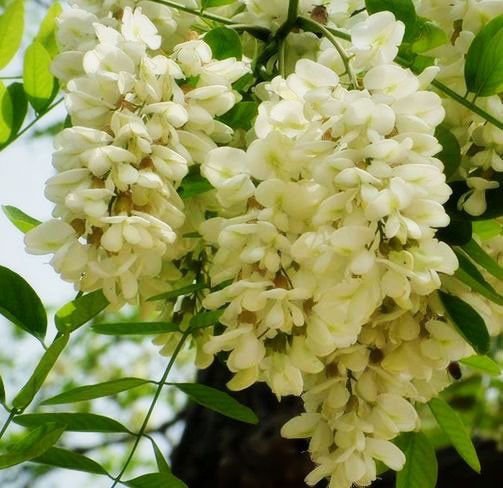
LATIN NAME: Sophora japonica
COMMON NAME: Japanese Scholar Tree, Japanese Pagoda Tree
Plant Profile
Sophora japonica is the street tree people notice in late summer, when most others have finished, because it hangs long panicles of creamy-white, pea-shaped flowers from a broad green crown. In China it has stood along avenues and in temple yards for centuries, and the old name scholar tree comes from its place by schools and examination halls. It is a tree of patience: it grows slowly at first, then settles into a long-lived, drought-tolerant shade maker.
The leaves are pinnate, carrying seven to seventeen oval leaflets on a central stalk, and the whole leaf can span twenty centimetres. The flower is followed by a pod unlike a normal pea pod: it is constricted between each seed so it looks beaded, and it hangs on the tree through winter as a string of papery segments. That beaded pod and the late flowering season separate the pagoda tree from the early spring locusts and the redbud planted beside it.
Gardeners keep the weeping form Pendula, a dome of cascading branches grown as a small garden specimen, and the straight species is the one chosen for broad city avenues because it tolerates heat, compacted soil, and smoke better than many natives. Beijing lists it among its favoured street trees, a sign of how tough the species is once established.
Beyond rutin, the tree is a model for breeding ornamental forms with cleaner flower colour and stronger wilt resistance, and labs multiply selected clones by shoot culture to keep a named street tree true. The work matters because a seedling row of pagoda trees varies widely in flower time and pod shape, so a city planting wants clones, not chance.
The tree’s main job is shade and avenue planting, where its late flower feeds bees when little else is blooming and its light crown lets grass grow beneath. The flowers draw pollinators in numbers, which is why beekeepers value a row of it.
Science & Biotechnology
The cream flowers and the unopened buds are unusually rich in rutin, a flavonoid glycoside that has been extracted commercially as a vascular tonic, and the bud preparation known as pagoda-tree flower buds is used in traditional cooking and medicine across north China. Chemists separate the bud and flower by their flavonoid load rather than by eye, with rutin and its near relatives quercetin and kaempferol leading the profile.
Uses & Benefits
The young flower buds are blanched or dried and used as a vegetable and a tea in northern China, picked before they open and cooked mild. The open flower is also steeped, and the seed is not eaten. The crucial note is that only the bud and flower are used; the rest of the tree is ornamental and structural, not food.
Growing from Seed
The beaded seed has a hard coat that blocks water, so scarify it by nicking or rubbing the coat, then soak it in warm water until it swells before sowing. Sow on a deep, well-drained seedbed and cover lightly, and the seedling will push a strong taproot once the coat is breached. Move young trees to their own pots once they stand a few centimetres tall, and set them out only after the stem has hardened.
Give the tree full sun and room to spread, since a crowded pagoda tree grows leggy and drops its lower branches. Trim the leader and wayward limbs while young to build a single clean trunk for avenue use, and protect the seedling from hard frost through its first cool season. Once established it asks for little and shrugs off the dry city summer.
A pagoda tree planted in a street or car-park pit faces a tougher life than one in a park, so the first years decide whether it thrives. Keep the base clear of weeds and grass for the first two seasons so the young root is not starved, and water deeply in dry spells rather than sprinkling the surface, which only trains the root to stay shallow. A mulch of bark or compost over the root zone holds moisture and keeps the soil from cracking in heat, but keep it off the trunk flare to avoid collar rot. Where salt is spread on winter roads, screen the base or wash the lower branches in spring, since the species tolerates smoke better than direct road salt on the bark.
Stake only if the site is windy, and remove the tie after the first year so the trunk learns to move and builds wood. The late flower is the payoff: a row of pagoda trees in full bloom draws bees along a city street where little else is flowering, and the light shade underneath lets grass and bulbs grow where a denser tree would smother them. Patience is the only cost, because the species is slow to flower from a young planting, and the beaded pod that follows is its quiet signature through the winter.
Our Take
I like the pagoda tree for the simple reason that it flowers when everything else is tired. For genus relatives try the Sophora japonica seed line, the yellow Sophora flavescens, and the shrubby Sophora davidii.
Related Reading
Continue exploring with these related plants: