


Zizania latifolia Seeds | Wild Rice
LATIN NAME: Zizania latifolia
COMMON NAME: Wild Rice
Plant Profile
The interest in Zizania is that a single species can be managed for a grain, a vegetable, or both, depending on the fungal partner, and that flexibility is rare among staple grasses.
The plant carries real cultural weight on both sides of the Pacific, and each shore has built a cuisine around a different part of it.
In China the swollen stem is stir-fried or braised and prized for its crisp bite, while the grain remains a minor speciality rice. The two products rarely appear together, because a stem given to the fungus no longer flowers and sets grain, so the grower chooses between the vegetable and the seed at the start of the season.
Science & Biotechnology
The water-bamboo relationship is studied as a fungus-plant interaction in its own right. The swollen stem is harvested as a vegetable, while the grain was once an ancient staple, and researchers track how the fungus, the plant, and the harvest fit together as a managed system. The balance is delicate, because a stem given fully to the fungus no longer flowers and sets the grain that gives the plant its English name.
Uses & Benefits
The grain is gluten-free with a distinct aroma, and modern work looks at Zizania starch and bran for food and functional uses. The grain cooks to a chewy, nutty product that sits apart from common rice in both texture and scent, and the bran carries pigments and fibre that attract food scientists interested in alternatives to wheat.
North American wild rice, called manoomin by the Anishinaabe, is a cultural keystone food traditionally parched, hulled, and boiled, and still gathered by canoe. The harvest is as much a ceremony as a crop, tied to the wetlands that produce it, and the paddling, knocking, and winnowing of the ripe heads are skills passed down through generations rather than learned from a manual.
Growing from Seed
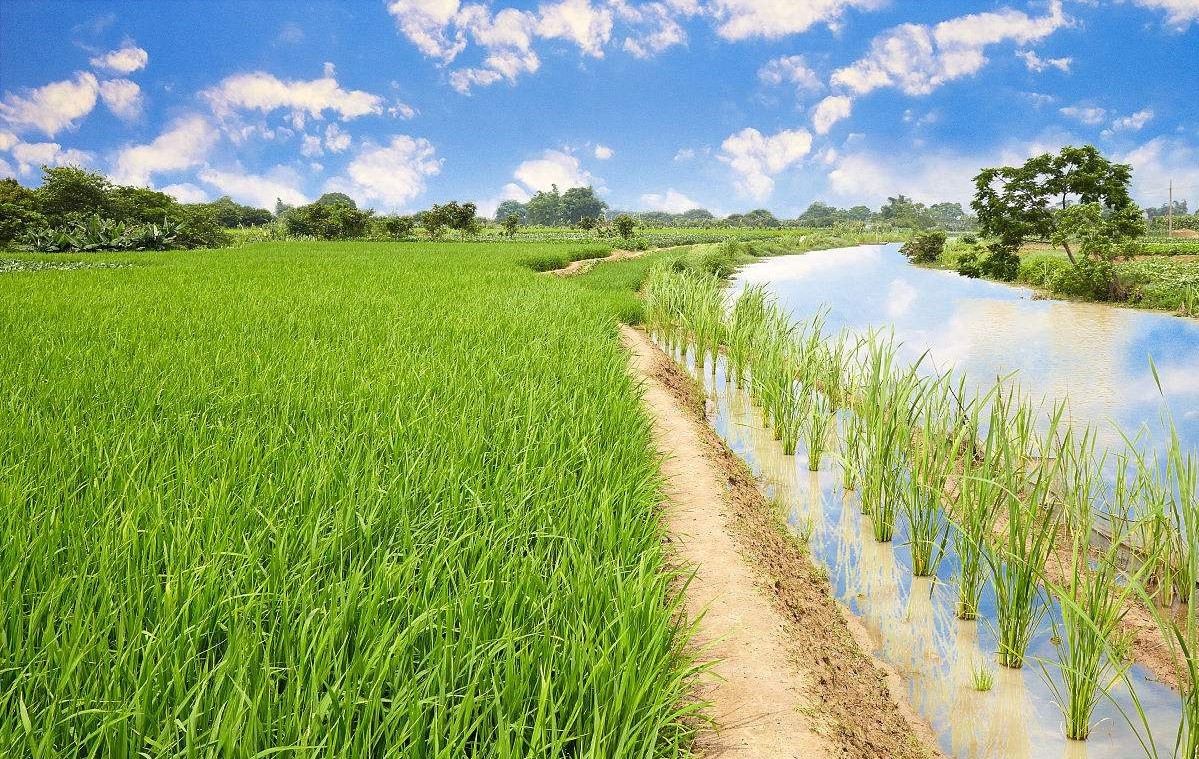
Wild rice is not rice at all but a tall aquatic grass of the shallows, and in East Asia its stem does something stranger than any grain, swelling into a vegetable when a smut fungus moves in. The plant bridges two continents and two very different harvests, which is what makes it worth a closer look, and the same genus feeds both a lakeside tradition and a kitchen vegetable.
It is a rhizomatous perennial reaching two to three metres, with broad arching leaves that are strap-shaped, and large open panicles of wind-pollinated florets. Male and female florets sit on the same plant but open at different times, and the grain that follows is long and dark. The whole plant reads as a bold, waving presence at the water’s edge, and the feathery head is the part most often pictured in accounts of the northern lakes.
In this Asian species the smut fungus Ustilago esculenta infects the stem, blocking flowering and swelling the base into the crisp white water bamboo eaten across China. Rather than a disease to fight, the interaction is cultivated as a vegetable system, with the swollen stem lifted and sold through the warm season, and the same clump may be cropped for years if the fungus is kept in the stand.
The genus spans East Asia and North America. The North American Zizania palustris is the wild rice of the Great Lakes, hand-harvested by Indigenous nations for centuries, while the Asian plant supplies both a minor grain and the water-bamboo vegetable. The two traditions share the same genus but very different tables, and the grain of the American species is the one most often sold as wild rice in shops.
This is a water plant, so the bed, not the border, is where it begins, and the water depth is the main variable to manage.
Sow the seed on wet mud or broadcast it into shallow, still water, and keep the crown flooded through the warm season in a sunny spot. The plant wants warmth and light on the water more than any particular soil richness, and a depth of a few centimetres over soft mud gives the seedling the best start before the stand fills in.
For water bamboo, propagate by division of infected clumps and keep the water ten to thirty centimetres deep, lifting and replanting each season in warmer regions. The vegetable form depends on keeping the fungal partner in the stand rather than on growing from clean seed, and a healthy division will throw a fresh swollen shoot as the warm weeks lengthen.
Our Take
Wild rice is a conversation piece as much as a crop, and it connects naturally to other rice-world plants. The northern wild rice at Zizania palustris is the grain form of the same genus, while the black rice at black rice and the upland rice at upland rice show how differently the grass family answers the call of the flooded field.
Related Reading
More species in the same orbit as Wild Rice: