


Rhapis multifida Seeds | Finger Palm
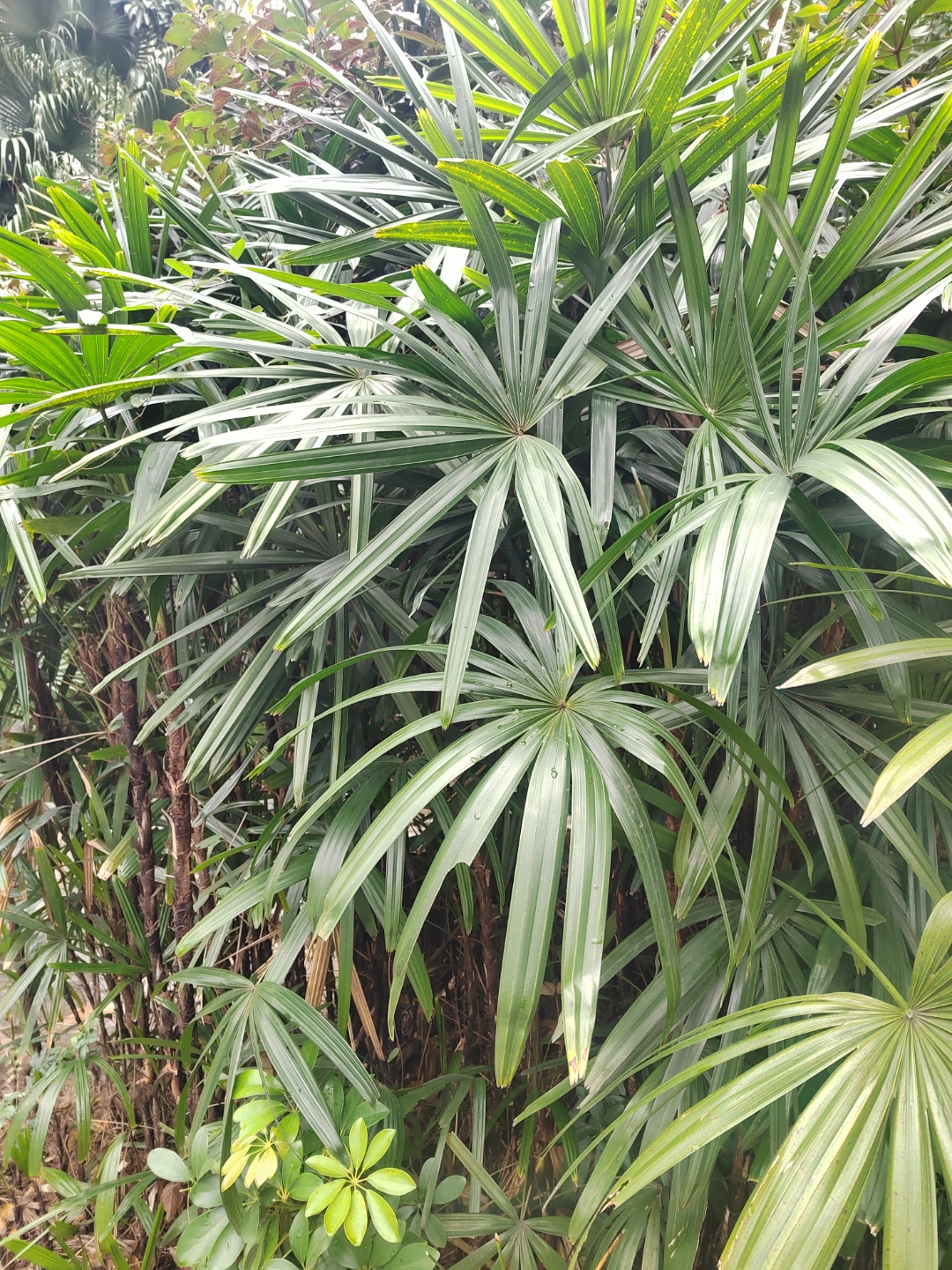
LATIN NAME: Rhapis multifida
COMMON NAME: Finger Palm
Plant Profile
Rhapis multifida is a Chinese fan palm that grows in clumps of pencil-thin stems, each carrying a leaf cut into many narrow fingers. It grows in the karst forests of Guangxi, Guizhou and southeastern Yunnan, on limestone hills where the soil is thin, alkaline and rich in leaf litter, and where the air stays humid under a canopy of taller trees. The stems are slender, one to two centimetres thick and two to three metres tall, wrapped in a mat of brown fibre, and they multiply from the base to form a dense clump. The leaves are round in outline and divided almost to the base into a dozen or more narrow segments, which gives the plant its name and its fine, feathery outline. It is one of the hardiest of the lady palms and one of the most elegant, and it has been grown in Chinese gardens for centuries. Small yellow flowers appear among the leaves, followed by small round fruit.
Science & Biotechnology
Rhapis multifida is a clustering fan palm in a genus of about a dozen species, all of them Asian and most of them from limestone or understorey habitats. The plant is dioecious, with male and female flowers on separate stems, so fruit is set only where both are present, and a single clump in a garden will flower for years without producing seed. The stems are covered in a fibrous sheath that persists and gives the plant its brown, felted look, and the clump expands by basal suckers rather than by a single trunk. The leaf is costapalmate, with a short midrib and a blade divided into segments, an arrangement that sheds water and withstands the drag of wind in a forest understorey. It grows slowly and tolerates deep shade, which is why it survives in karst thickets and why it is such a good houseplant. Its wild habitat is being lost to quarrying and to collection for the horticultural trade.
Uses & Benefits
The palm is grown as an ornamental in mild climates, in shade gardens, courtyards and containers, where its fine foliage and clumping habit make it one of the best understorey palms. It is also a reliable houseplant, tolerating low light and dry indoor air better than most palms, and it is used in bonsai and in Japanese-style gardens. In China the stems are used for walking sticks and for small handles, and the fibre is used for rope and for brushes. The young shoots are eaten as a vegetable in parts of Guangxi, and the fruit is not eaten. In a garden it is slow, expensive and long lived, and it is worth buying a well-grown plant rather than seed. It is not a palm for full sun or for dry, alkaline soil in a hot climate, and it needs shelter from wind.
Growing from Seed
Sow fresh seed in a deep pot of loam, leafmould and grit at 25 to 28 degrees, covering it lightly; germination is slow and can take three to six months, and the seed loses viability quickly. Keep the pot in shade and humid. Grow the seedling in a deep container for at least two years, since the roots are long and resent disturbance. Plant out in shade or dappled light, in humus-rich, well-drained soil, and mulch with leaf litter. Water regularly but never let the pot stand in water. Feed twice a year with a palm fertiliser. The plant is hardy to about minus five once established, with damage to the leaves below that. Divide clumps in spring if they become too large, and do not cut the growing point.
Our Take
A Chinese lady palm with pencil stems and leaves cut into dozens of fingers. Slow, shade-loving, and one of the best indoor palms.
Related Reading
Readers interested in Finger Palm frequently explore these as well: