


Malus hupehensis Seeds | Hupeh Crab Apple
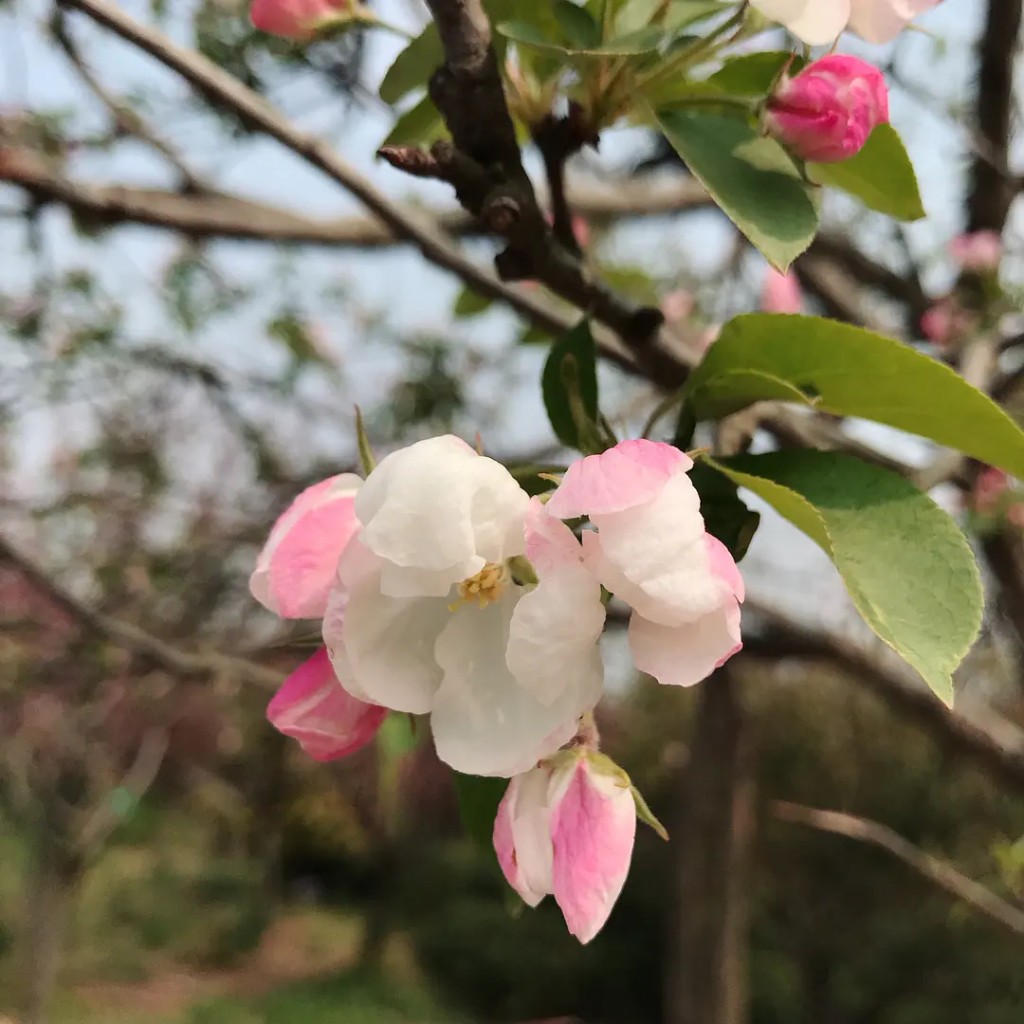
LATIN NAME: Malus hupehensis
COMMON NAME: Hupeh Crab Apple
Plant Profile
Hupeh crab apple is a Chinese species that makes a rounded tree of six to eight metres, with arching branches and a bark that peels in thin flakes on old specimens. Buds open pink in April and the flowers fade to white, carried in loose clusters along the whole length of the shoot, so the tree reads as a cloud rather than a series of branches. Small fruits follow, yellow flushed with red, hanging on long stalks and holding well into winter when little else is left for the birds. The leaves are narrow, glossy and often lobed near the base on young growth. In its native Hubei and Sichuan it grows on hill slopes and at forest edges, and it has been planted around villages for so long that the wild range is uncertain.
Science & Biotechnology
Malus hupehensis is one of the apomictic crab apples: many populations set seed without fertilisation, so seedlings are clones of the parent. That trait, unusual in apples, has made the species a model for studying apomixis and a favourite of breeders who want to fix a genotype in one generation. It is also one of the most widely used rootstocks in Chinese apple growing, because its roots tolerate drought, resist crown rot and dwarf the scion in a predictable way. Genetic surveys show distinct lineages in the eastern and western parts of the range, with the western populations more diverse and probably older. The species is also a reservoir of disease resistance genes that apple breeders have drawn on for fire blight and scab.
Uses & Benefits
The fruit is small, tart and full of pectin, and in Hubei it is used for jelly, for vinegar and for a fermented drink rather than eaten fresh. The leaves are dried as a tea substitute, sold as crab apple leaf tea, with a mild, toasty flavour and no caffeine. In the garden the tree is one of the best spring-flowering crabs for a small plot: it flowers young and heavily, takes pruning well and holds its fruit into the cold. It also works as a pollinator for orchard apples, since its bloom period overlaps with the early commercial varieties. Its fruit is a reliable winter food for thrushes and waxwings, and the tree supports a long list of moth caterpillars.
Growing from Seed
The seed needs cold and moisture. Mix it with damp sand and keep it at four degrees for ten to twelve weeks, then sow in early spring in a loam-based compost, one seed per deep pot, one centimetre down. Germination is usually prompt after stratification and the seedlings grow fast, reaching thirty centimetres in the first season. Grow them on in full sun, pinch the leader if you want a feathered tree, and plant out in autumn into any reasonable soil that drains. The tree tolerates poor ground and city air but resents waterlogging. Prune only to remove crossing branches in winter, since the species flowers on short spurs that should not be cut away.
Our Take
A crab apple with a serious second career as a rootstock and a model for apomixis. It flowers young and never looks ordinary.
Related Reading
Continue exploring with these related plants: