


Xeranthemum annuum Seeds | Immortelle
LATIN NAME: Xeranthemum annuum
COMMON NAME: Immortelle
Plant Profile
That papery wall is the plant’s answer to a short, dry season. It lets the head advertise to pollinators while it is fresh and then simply stay put once the moisture is gone, so the flower spends no energy on soft tissue that would only rot. The result is a bloom that looks preserved while still living.
Stems are slender and wiry, carrying narrow, grey-green leaves coated with a white felt of hairs. The felt is the plant’s answer to a hot, dry homeland, cutting water loss and reflecting light. The species is diploid at 2n = 18, a tidy number for a plant that breeders rarely bother to double or hybridise, since the wild type already does the job.
Unlike a soft-petalled daisy that browns as it wilts, the scarious bract is already dry and rigid at full colour, so it simply stays. That structure is what lets a picked stem hold its look for months with no special treatment beyond a dark, airy place, and it is the trait that made the immortelle a trade flower long before the garden took it up.
The immortelle is grown as much for the shed as for the border, and the two uses ask for different timing.
Cut the stems when the bracts are fully coloured but before any seed shows, and hang them in a dry, shaded spot; the heads hold their tone while the foliage crisps away. The result is a winter arrangement that needs no water, and a bundle of the purple form keeps its colour longer than most dried flowers in the trade.
Science & Biotechnology
The colour that survives drying is backed by a simple, well-mapped flavonoid set, which is why the tones are so stable rather than fugitive like those of a rose.
The leaf felt is a dense layer of woolly trichomes that traps a still layer of air and slows transpiration, letting the plant thrive on lean, exposed ground where few annuals persist. The same hairs give the grey cast that pairs well with silver borders, and they are the reason the plant shrugs off drought that wilts neighbours.
Researchers have raised Xeranthemum from shoot cultures to study the development of the scarious bract and to hold selected colour forms, since open-pollinated seed of a mixed strain drifts between pink, white and rose. A clean culture keeps a named tint true across a season of liners.
Uses & Benefits
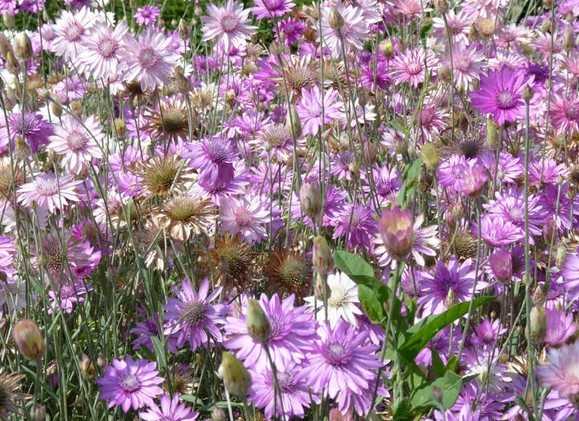
The immortelle earns its name from the part most people mistake for a petal. The true florets are tiny and sit in the centre, while the showy, long-lasting colour comes from dry, scarious bracts that wrap the head. Once cut and dried these bracts keep their purple-pink, white or rose tone through the winter, which is why the plant is the classic everlasting of the dried bouquet and why a single sowing stocks a shed for months of arranging.
The dried-flower trade took the immortelle from the Balkan hillside to the parlour long before the garden adopted it, and the purple form in particular keeps its tone better than most everlastings, which is why it still turns up in wreaths and winter arrangements sold by the bundle.
Growing from Seed
This is a plant of poor, free-draining ground, so rich soil only makes it leggy and washes the grey out of the leaf.
Sow the very fine seed on the surface of a gritty, free-draining medium and press it in without covering, because light helps it emerge, then keep the young plants on the dry side. A warm, sunny bench gives an even stand that does not damp off.
Thin or set plants 20 to 25 cm apart once they show several true leaves, so the upright wands stand clear of each other and the airy grey foliage stays free of mildew. Crowded plants lean and the stems kink, which spoils them for the drying shed.
For the shed, cut just as the bracts colour and before the first seed shows, then hang the stems in a dark, dry place; the heads hold while the leafy stem crisps away. A labelled jar of saved seed from a chosen pink or white form keeps a colour line going the next year without a fresh purchase.
Our Take
I grow immortelle at the hot, dry end of a bed where little else likes to stand, and I cut stems for the house in late summer. Its dried-flower kin are the strawflower at Helichrysum bracteatum and the curry plant at Helichrysum italicum, with the pot-marigold at Calendula officinalis for cut colour beside them.
Related Reading
If Immortelle appeals to you, these related plants are worth a look: