


Heliotropium arborescens Seeds | Heliotrope
LATIN NAME: Heliotropium arborescens
COMMON NAME: Heliotrope, Cherry Pie, Garden Heliotrope
Plant Profile
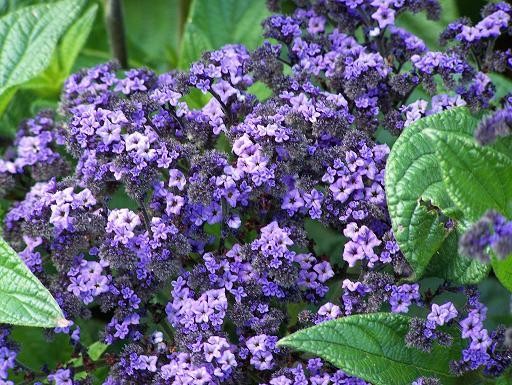
Heliotrope is a half-hardy South American shrub that northern gardeners treat as bedding and southern gardeners treat as a hedge. Left alone in a frost-free climate it makes 1.2 m or more, with coarse, deeply veined leaves and terminal clusters of small tubular flowers. The common form is an unusual deep violet, almost navy in shade and lit with a purple sheen in full sun.
What people remember is the smell. The flowers carry vanillin and coumarin together, which the nose reads as cherry pie, almond or vanilla depending on the day and the nose. It is strongest in still, warm evening air, and one plant beside a door will scent a whole porch after dark.
The name comes from an old belief that the heads turn to follow the sun. They do not, or not reliably; young heads lean toward light and mature ones stay where they are. Plants are frost tender, reach 60-90 cm in a season from seed, and flower from July until the first cold night shuts them down.
Science & Biotechnology
Heliotropium is a borage-family genus of roughly 300 species, most of them in dry warm regions. The scent is a blend of benzenoids released from the petal surface, chiefly vanillin and coumarin, the same coumarin note that turns up in new-mown hay and sweet woodruff. Breeding has pushed the palette toward white and pale lilac, but the violet form remains the most strongly scented.
The genus also produces pyrrolizidine alkaloids, concentrated in roots and older foliage. These are liver-toxic when taken internally over weeks, and heliotrope has no place in the kitchen or the teapot. Handling the plants is harmless; the warning matters for anyone tempted to brew the herb.
Colour in the flowers depends on anthocyanins held in the vacuoles of petal cells, and the violet tone shifts toward blue as the tissue ages and pH drifts. That is why a cluster can look purple on opening day and almost blue three days later.
Uses & Benefits
In bedding schemes heliotrope is grown for scent and for a dark colour that makes pale neighbours look brighter. It suits containers by a door or on a step, where the fragrance meets you at nose height, and it takes part shade better than most violet-flowered bedding. Victorian gardeners raised it in glasshouses and used the flowers in posies; it still appears in perfumery as a vanilla-like base note.
In warm climates it makes a loose informal hedge that flowers almost without pause, and it is a steady nectar source for small bees and hoverflies through the hottest weeks. Pinching the tips in June gives a bushier plant and more heads in August. Cut stems last several days in water and carry their scent into the house.
Growing from Seed
Sow thinly on the surface of moist seed compost and leave the light on it, since the seed is fine and needs exposure. Germination takes two to three weeks at 20-22°C. Seedlings are slow for the first month and then accelerate, so pot them on before the roots circle the module.
Plant out only once the soil has warmed and frost is past. Full sun gives the heaviest scent, rich soil with steady moisture gives the largest plants, and too much nitrogen produces leaf at the expense of flower. In cold gardens lift a favourite plant before the first frost, cut it back by half and overwinter it indoors at around 10°C. Seed sown in February will be flowering by July.
Our Take
Grow it for the evening scent and for the dark violet that makes everything around it look better lit. Keep it in a pot that can be moved under cover before the first frost, and keep it out of the kitchen.
Related Reading
If Heliotrope appeals to you, these related plants are worth a look: