


Camptotheca yunnanensis Seeds | Yunnan Happy Tree
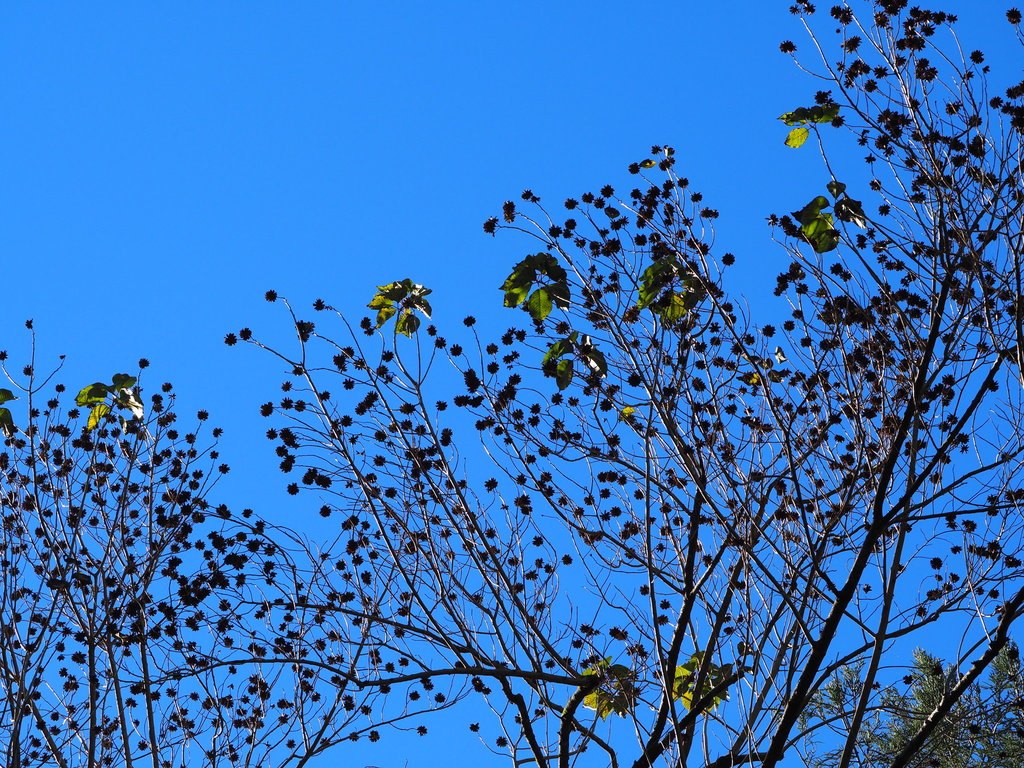
LATIN NAME: Camptotheca yunnanensis
COMMON NAME: Yunnan Happy Tree
Plant Profile
Camptotheca yunnanensis was described by Louis-Albert Dode in 1908 from material collected in Yunnan, separated from the better-known Camptotheca acuminata on the basis of leaf indumentum, fruit shape and the size of the floral cup. It is a deciduous tree of the warm forests of southern China. Dode’s description is brief and rests on a single gathering.
Dode was a French dendrologist and lawyer whose private arboretum at Tremblay-sur-Mauldre held an enormous collection of trees, and who published a long series of new species from Chinese material sent to him by missionaries and collectors. Many of his names have since been reduced to synonymy. He never travelled to China and worked entirely from sent material.
Modern treatments generally sink C. yunnanensis into C. acuminata, treating the differences as clinal variation across a wide range that runs from Yunnan through Guizhou, Guangxi and Guangdong to Fujian and Zhejiang. The tree itself is unmistakable either way. The differences he saw are now read as part of a cline.
It grows to about twenty metres, with alternate, ovate leaves that carry the acuminate tip the genus is named for, and greenish flowers in dense rounded heads at the ends of the shoots. The flowers are green and are pollinated by insects of several kinds.
Science & Biotechnology
The reason this tree is famous has nothing to do with its form. Camptotheca acuminata is the source of camptothecin, the alkaloid isolated in 1966 by Monroe Wall and Mansukh Wani during a screening programme that also produced paclitaxel from yew bark. The 1966 isolation came from bark collected in China decades earlier.
Camptothecin poisons topoisomerase I by trapping the enzyme in a covalent complex with DNA, and the resulting strand breaks kill dividing cells. The parent compound is too insoluble and too unstable for clinical use, and the two drugs that reached the clinic, irinotecan and topotecan, are semi-synthetic derivatives. The failure of the parent drug in early trials is a textbook case.
Camptothecin content varies with provenance, season and tissue, and the southern populations have been assayed repeatedly in the search for high-yielding material. The Yunnan name survives in that literature even where the taxonomy does not. Young leaves carry more alkaloid than old ones in most assays.
Uses & Benefits
In China the tree is grown as a fast shade tree and as a source of bark and root for the alkaloid industry, in plantations that are harvested on short rotations. It is also planted along streets and in parks in the warmer provinces. Harvest is by coppicing, and the stumps resprout within a season.
Traditional use treats the fruit and bark as remedies for skin complaints and for tumours, a practice that predates the isolation of camptothecin by centuries and that now reads as a case of folk medicine pointing at real chemistry. The fruit is the part most often named in the old texts.
The seed oil has been examined as an industrial oil, and the wood is soft and of little value. The tree’s commercial identity rests entirely on one molecule and on the plantations built to supply it. The timber is light and goes into boxes and matches. Close allies on the list: Camptotheca acuminata, Camptotheca lowreyana and Hibiscus aculeatus.
Growing from Seed
Seed is orthodox and easy. Sow in spring at twenty to twenty-five degrees in a moist, free-draining mix, cover lightly, and germination follows in three to five weeks with a high percentage. No pretreatment is needed beyond a soak of a few hours. Fresh seed comes up faster than seed kept over winter.
Seedlings grow fast and can reach a metre in their first season, so give them room. The tree prefers deep, moist but well-drained soil and full sun, and it tolerates occasional flooding better than most timber trees. The species naturalises readily in warm, wet climates.
Young plants need protection from frost for the first two or three winters. Once established the tree suckers freely from the roots, a habit that is useful in a coppice block and a nuisance in a small garden. Coppiced trees live far longer than unpruned ones.
Our Take
Growing a tree because of what is inside it rather than what it looks like is a particular pleasure, and this one has a good claim on that. It is a plain, fast, unremarkable tree that happens to make one of the most studied alkaloids in medicine. It is a tree that invites a second look at the label.
The name on the label may be a synonym, and the tree will not care in the slightest. Plant it for the shade and for the story. Plant it for the shade, and read the label while you wait. The chemistry is the reason, and it is a sufficient one.
Related Reading
Readers interested in Yunnan happy tree frequently explore these as well: