


Gomphocarpus physocarpus Seeds | Balloon Plant
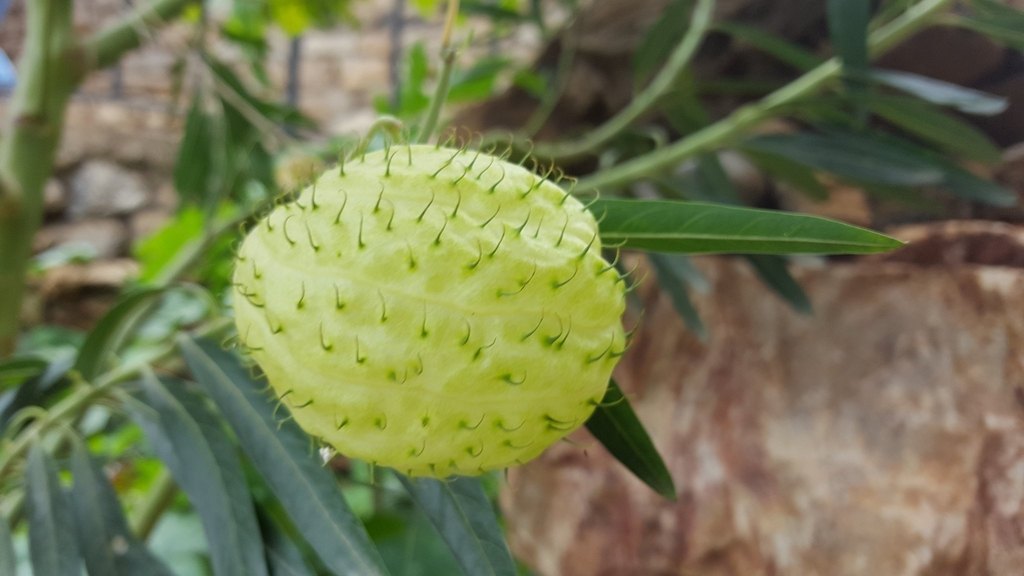
LATIN NAME: Gomphocarpus physocarpus
COMMON NAME: Balloon Plant
Plant Profile
The balloon plant is a milkweed relative from south-eastern Africa, grown for its fruit rather than its flowers. It makes an untidy shrub up to 2 m tall with narrow, lance-shaped leaves 7 to 10 cm long, and from midsummer it carries small white flowers with hooded centres, about a centimetre across.
The fruit is the point. A pale green follicle, inflated into a sphere 8 cm across and covered in rough hairs, hangs from the stem like a paper lantern. Inside are brown seeds with silky tufts, and when the husk splits they spill out and drift, which is how the plant has travelled so far from home.
It is a perennial in frost-free climates, an annual or a pot plant anywhere else, and it grows on roadside banks at 850 to 1,500 m in its native range. The Afrikaans names are balmelkbossie and wilde kapok; the English ones, hairy balls and bishop’s balls, have kept it out of a good many catalogues.
Science & Biotechnology
The pollination is the most interesting thing about the genus. The stamens are fused to the head of the style and each anther holds its pollen in two waxy packets, the pollinia. Insects visiting the flower catch these packets on their legs or proboscis and carry them, whole, to the next plant.
The flower is self-incompatible, so the elaborate machinery is not decoration: it prevents a plant from fertilising itself and enforces cross-pollination. The pouch formed by the petals guides an insect’s foot into exactly the position where a pollinium will attach, which is precision engineering on a very small scale.
The milky sap contains cardenolides, the same class of compounds that make foxgloves and oleanders dangerous. Caterpillars of Danaus butterflies eat the leaves and store the toxins, so the African monarch is unpalatable and why its colouring is a warning rather than a decoration. The other Apocynaceae in the catalogue are Gomphocarpus fruticosus, Cynanchum paniculatum and Cynanchum chinense.
Uses & Benefits
It is grown for dried arrangements and for the curiosity of the fruit. The stems are cut when the balloons are full-sized but still green, and hung upside down; they hold their shape for months and are a better conversation piece than most dried flowers. Florists sell them as balloon pods, and a single stem is enough in a tall vase. Pick them before the hairs harden, or the stem will feel like a cat’s tongue in the hand.
In its native range the plant has a medicinal record: ointments for warts, and the seeds used in rituals. The sap is toxic and can injure the eye, and there was a reported case in New Zealand in 2017 of a man who became unwell after handling it. Gloves are sensible, and washing your hands is not optional.
For wildlife it is a host plant, and in a warm garden it will be found by monarch butterflies within a season. That is the strongest argument for growing it, and the strongest argument for keeping it in a pot in a climate where it is not native, since it naturalises readily.
Growing from Seed
Sow in late winter at 20 to 24 °C. The seed has a tuft and a hard coat; soak it overnight and sow 5 mm deep in a free-draining mix. Germination takes two to four weeks. The seedlings are quick to grow and will flower in their first summer if sown early enough, which is unusual for a shrub and the reason it is worth treating as an annual in cold gardens.
Cuttings of about 10 cm, with the lower leaves removed, root easily in a light mix in summer. Let the cut dry for an hour before inserting it, because the latex will seal the stem and rot in wet compost. Keep the cuttings warm and out of direct sun until they root.
Full sun, moderate water and sandy, well-drained soil. It grows fast and needs staking in a windy site, since the fruit makes the stems top-heavy. In cold climates, lift a plant before the first frost, cut it back, and keep it dry and just frost-free through winter.
Our Take
It is a plant that children remember and gardeners argue about. The fruit is genuinely strange, the flowers are modest, and the whole thing looks like it was designed by somebody with a sense of humour. That combination keeps it in cultivation.
Grow it in a pot if you live somewhere warm enough for it to seed about, and deadhead before the husks split. The sap is the real caution: it is toxic, it stings if it gets into a cut, and it should not be within reach of a toddler or a cat.
Related Reading
If Balloon Plant appeals to you, these related plants are worth a look: