


Cenchrus setaceus Seeds | Crimson Fountaingrass
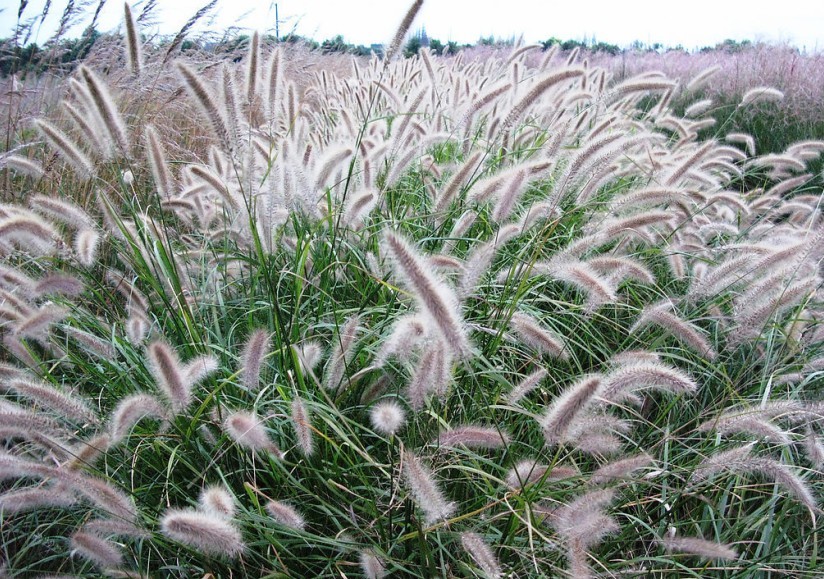
LATIN NAME: Cenchrus setaceus
COMMON NAME: Crimson Fountaingrass, Purple Fountaingrass, Tender Fountaingrass
Plant Profile
Cenchrus setaceus, long sold as Pennisetum setaceum, is a clump-forming grass of North Africa and the Middle East, growing to a metre with narrow, arching leaves and long, feathery flower spikes in pink, purple or buff. It is drought-tolerant, salt-tolerant and extremely persistent.
The species is a serious invasive weed in Hawaii, California, Arizona and parts of Australia, where it colonises roadsides, lava fields and dry grassland and carries fire into areas that rarely burned before. The dark-leaved cultivar sold as Rubrum is the form most gardeners know. It is also one of the few grasses that will grow in pure sand on the coast, where salt and wind remove almost everything else.
Science & Biotechnology
The plant spreads by seed, and a single inflorescence can carry hundreds of them, each with a bristly husk that catches in fur and clothing. Seed germinates quickly after rain and the seedling flowers within a few months, which is why infestations build fast.
The purple-leaved cultivars were long described as sterile, but in warm climates they set viable seed and can revert to green. That reversion matters: a purple plant that seeds produces green offspring, and the green ones spread further. Several jurisdictions now restrict sale, and some have banned it outright. The grass is also planted on dunes for stabilisation in parts of Africa and Australia, a role in which its drought tolerance is an asset and its seeding habit a liability.
Uses & Benefits
In cultivation it is used for summer bedding, for containers and for dry gardens, where the arching spikes catch light and move in wind. It is also planted for erosion control on dry slopes, which is how it reached many of the places where it is now a problem.
There is no food or medicinal use of consequence. The plant is grown purely as an ornamental, and its value in a garden has to be weighed against the risk of it escaping. In frost-free climates the risk is real; in cold winter areas, where seed does not survive, it is a harmless annual.
Growing from Seed
Seed germinates in one to three weeks at 20 to 25°C with no pretreatment. Sow in spring under cover, and plant out after the last frost. Division in spring is easy and keeps a selected form true.
The grass wants full sun and any well-drained soil, and it needs almost no water once established. Cut back hard in late winter to remove dead foliage, and divide every third year to stop the centre dying out. In warm climates, cut the flower spikes before they set seed, and check local rules before planting at all. In cold climates it is grown as an annual and lifted after the first frost, which removes the risk of it seeding.
Our Take
A beautiful and genuinely invasive grass, fine in a cold garden and a liability in a mild one, so cut the spikes before they seed.
Related Reading
Readers interested in Crimson Fountaingrass frequently explore these as well: