


Lagenaria siceraria Seeds | Big Fruit Gourd
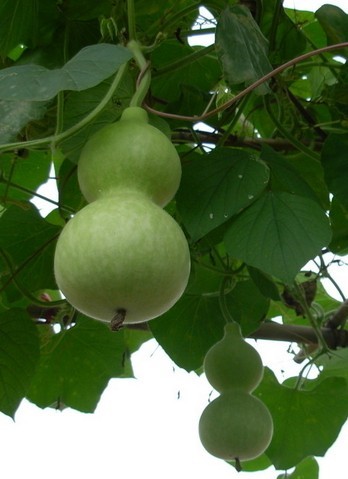
LATIN NAME: Lagenaria siceraria
COMMON NAME: Big Fruit Gourd, Bottle Gourd
Plant Profile
The tell-tale mark of the whole genus is the white, trumpet-shaped flower that opens in the evening and shuts by morning, scented to pull night-flying moths to the pollen. The leaves are broad and heart-shaped, and the fruit starts green and round before it lengthens or bulges into the shape the grower lets it keep. The stem flares where it meets the fruit, and the rind lignifies as the shell matures.
The large-fruited forms were chosen wherever a big, durable container mattered, from the storage gourds of Africa to the musical drums of the Americas. Because the plant is the same species as the small gourd, the size is a matter of selection and care, not a separate kind. The name siceraria recalls its use as a cup, and the biggest sorts simply took that use to its limit.
The fruit earns its keep in two stages. The young, tender giant is a vegetable; the mature, hollow shell is a tool.
Leave the chosen fruits on the vine until the stem browns and the shell sounds hollow when tapped, then cure them in a warm, airy place until the inside is fully dry. Cut an opening, scoop the dry fibre, and the shell becomes a basin, a drum, or a storage vessel that lasts for years. A big, thin-walled fruit needs a sling on the trellis so it does not tear the vine as it swells.
Science & Biotechnology
The bitter taste comes from cucurbitacins, compounds that defend the plant and can concentrate in stressed fruit. Always taste a thin sliver of the young flesh; if it is bitter, do not eat the fruit and compost it instead. The edible types were selected down to low levels, but the caution stands because the compound is real, not folklore, and cooking does not remove it.
Uses & Benefits
Size changes nothing about the family defence chemistry. The big gourd can still carry the bitter triterpenes that make wild gourds unsafe, so the young, edible stage must be tasted before it is cooked.
As the fruit ripens the rind turns to lignified fibre that resists rot and takes carving, paint, and wax. The young flesh, by contrast, is mostly water with a little vitamin C and cooks like a mild summer squash. The line between the two uses is simply ripeness: eat young and sweet, or let harden for the workshop.
Pick the fruit while the rind still yields and the seeds are soft, then peel and cube it for curry, soup, or a slow braise where the mild flesh takes the spice. In many cuisines the young giant gourd is the everyday pot vegetable, prized for size and a clean taste. Taste first, cook only the clean fruit, and save a few fruits on the vine for the dry, craft stage.
Growing from Seed
The big fruit gourd is the giant of the bottle-gourd genus, the same Lagenaria siceraria as the small craft types but selected for heft. Given a long, hot season and a sturdy frame, a single fruit can swell to a very large size and harden into a shell that makers turn into basins, drums, and the great calabashes of older households. The vine itself is no different from its small kin: a rough, dusk-flowering annual that climbs by tendril.
This is the most heat-hungry of the gourds and needs the longest run, so start it early under cover and give it the strongest support you can build. Cold soil at any stage stalls it.
Move pot-grown seedlings into the garden when they carry three true leaves and stand about fifteen centimetres tall, setting two plants at the foot of a stout trellis, arch, or pergola and keeping the crown at the pot level. Plant high, with the top of the root ball level with the surrounding soil. A warm, sheltered site with a wind break gives the long season the giant fruit needs.
Space the vines so the fruit hangs free, and feed with a balanced liquid as the vine runs to build the heavy fruits, easing off only as the rind hardens. Thin the set so the plant ripens a few full shells rather than many small ones. Harvest the craft fruits only after the stem browns and the shell rings hollow, then cure them slow and dry.
Our Take
The big fruit gourd turns a single vine into a year of useful objects. For more from the hard-shell world, sow the Lagenaria siceraria seed, the curling Snake Gourd seed Trichosanthes anguina, or the sponge Luffa aegyptica seed.
Related Reading
Readers interested in Big Fruit Gourd frequently explore these as well: