


Camptotheca lowreyana Seeds | Lowrey’s Happy Tree
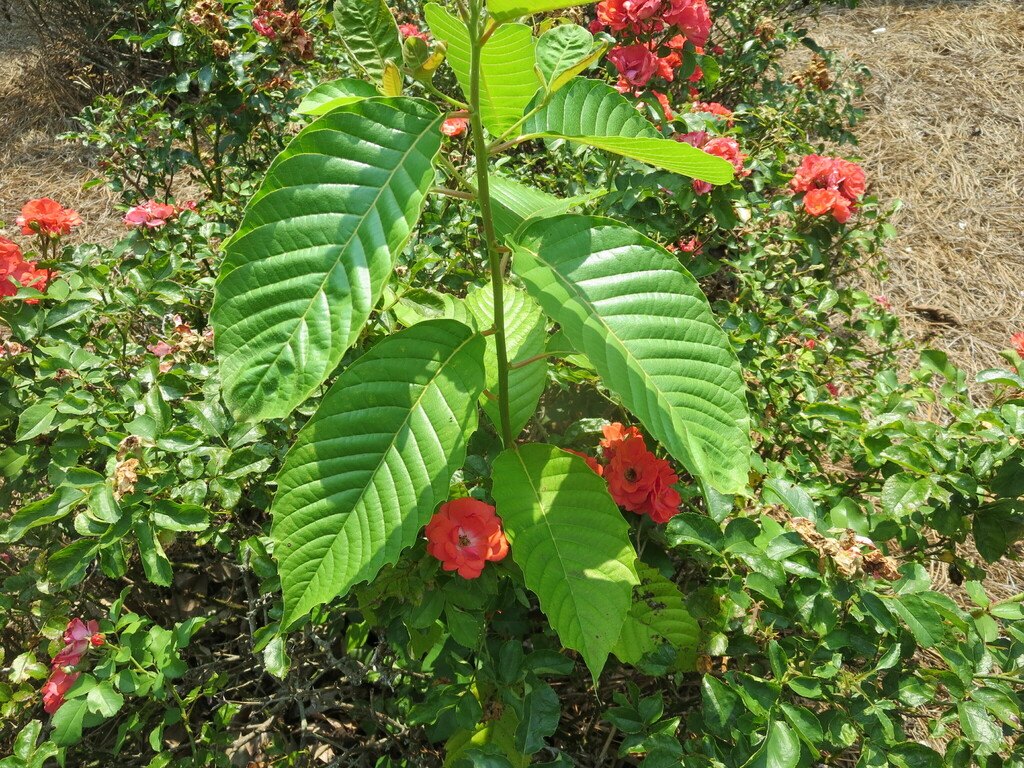
LATIN NAME: Camptotheca lowreyana
COMMON NAME: Lowrey’s Happy Tree
Plant Profile
Camptotheca lowreyana is a Chinese tree of the tupelo family, described in the 1990s from the hills of Yunnan, Guangxi, Guangdong, Fujian and Sichuan, and it ranks among the handful of plants in the world that make camptothecin, the compound behind two of the most important anticancer drugs of the past fifty years.
It is a deciduous tree to about twenty metres, with alternate, ovate leaves, small greenish flowers in rounded heads, and a dry, winged fruit that hangs in a loose ball and turns brown in autumn. It is close to the common camptotheca of cultivation and differs in leaf shape, fruit size and the chemistry of its bark.
The genus holds two or three species depending on the authority, all Chinese, and the common one, Camptotheca acuminata, is planted widely in the warm south as a street and specimen tree. This species is the rarer of the two, with a much narrower range, and it was separated partly on the basis of its higher camptothecin content.
The name records a person rather than a place: Lowrey, for a botanist associated with the material, with the genus name meaning curved ear, from the shape of the fruit’s wing. It is a small, unromantic name for a tree that has had an outsized effect on oncology. Names of this kind are common in Chinese taxonomy, where new species are often named for a colleague.
Science & Biotechnology
Camptothecin was isolated in 1966 by Monroe Wall and Mansukh Wani from the bark and wood of Camptotheca acuminata, in a screening programme that also produced taxol from yew. The compound is a pentacyclic alkaloid with a lactone ring, and that ring is the source of both its activity and its difficulty.
Its target is topoisomerase I, the enzyme that relieves the torsional strain in DNA ahead of the replication fork. Camptothecin traps the enzyme in a covalent complex with the cut strand, the fork collides with the frozen intermediate, and the cell dies. It is a subtle mechanism, and it took years to work out.
The lactone ring opens at physiological pH, and the open form is inactive and binds to plasma albumin, so the parent compound performed poorly in early trials. The solution was semi-synthesis: irinotecan and topotecan, both made from camptothecin, are the drugs that reached the clinic and stayed there. Both are still in routine use for colorectal, lung and ovarian cancer.
Uses & Benefits
The tree is grown in plantations in southern China for the camptothecin in its bark, wood and leaves, and the industry is a quiet one: a few thousand hectares, a handful of processors, and a supply chain that feeds the pharmaceutical plants. Leaf harvest is preferred because it does not kill the tree.
In its native range it is also a timber and shade tree of secondary forest, fast-growing and tolerant of poor soil, and it has been planted for erosion control on slopes. The wood is soft and not durable, and it is used for pulp, boxes and light construction rather than for furniture. Its main value in a landscape is speed: it covers a bare slope in three or four years.
The medicinal use of the genus in China is older than the chemistry. Bark and root were used in local practice for skin complaints and gastrointestinal problems, and the plant appears in regional herbals under names that translate as happy tree, a reference to the fruit, not to any mood-altering property. The name has misled more than one popular article into claiming an antidepressant, which it is not.
Growing from Seed
Seed germinates readily without pretreatment. Sow in spring at twenty to twenty-five degrees, cover lightly, and seedlings appear in two to four weeks; they grow fast, and a plant sown in March can be a metre tall by September in a warm climate. Fresh seed is much more reliable than seed that has been stored dry over winter.
It wants full sun, deep soil and plenty of water in the first years, and it will tolerate both acid and neutral ground. Frost cuts it back when young, so plant in spring and protect the stem for the first two winters if your site is marginal. Once the trunk is woody it takes ordinary winters in zone eight without damage.
The tree coppices hard, which is what makes leaf harvest possible, and a stool cut every second year will keep producing for decades. Prune in winter, keep one or two leaders if you want timber, and let the crown develop without interference if you want fruit. The fruit is not edible and should not be confused with anything in the grocery.
Our Take
This is a tree that changed medicine and never became famous, which is a strange fate. It grows like a weed, it is planted for pulp and shade, and its chemistry is in the cabinet of every oncology ward in the world. The connection is easy to miss. A row of them along a road in Guangxi is a row of pharmaceutical raw material, and nobody passing by knows it.
Grow it if you have the space and the climate, for the fast shade and the odd, winged fruit, and know what it is. It is not an ornamental tree in the conventional sense, but it is a remarkable one. Plants with a history this large rarely look so ordinary.
Related Reading
Continue exploring with these related plants: