


Ipomoea aquatica Seeds | Swamp Morning Glory
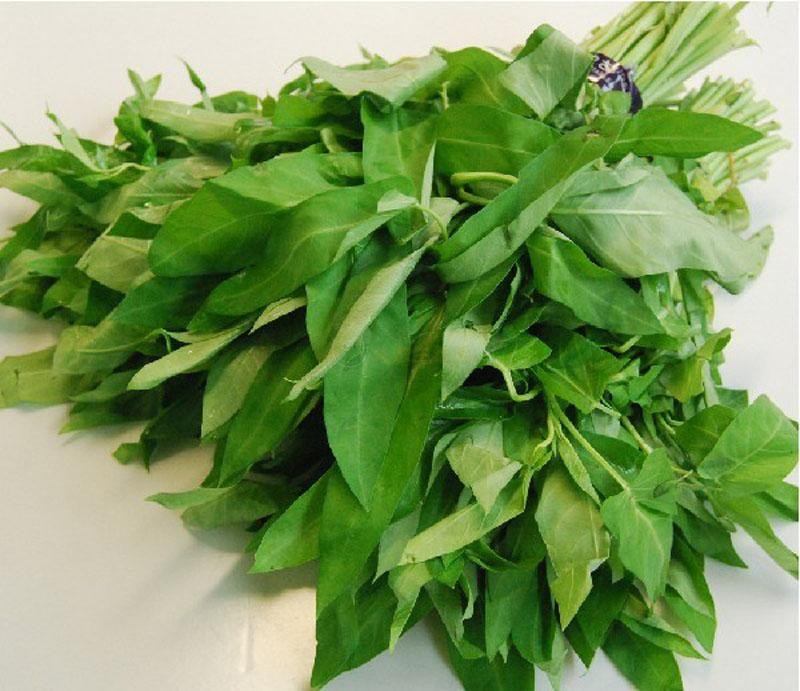
LATIN NAME: Ipomoea aquatica
COMMON NAME: Swamp Morning Glory
Plant Profile
Water spinach is a morning glory that nobody grows for its flowers. Its hollow, buoyant stems let the vine float across a flooded field, and those same stems are harvested by the armful as one of the most eaten leafy vegetables in Asia, sold in markets from Bangkok to Manila as kangkong or ong choy. The plant is so productive in water that several US states regulate it as a potentially invasive aquatic weed, a vegetable and a nuisance in the same breath.
The stems are filled with air channels, aerenchyma, that let the plant raft on the surface instead of sinking. The leaves are arrow- to spear-shaped and the vine roots freely at the nodes wherever it touches mud or water, which is why a single cutting becomes a mat and why a pond can be covered in a single warm season.
Left to flower, water spinach opens the typical funnel-shaped convolvulus bloom, white or pale, but growers usually harvest the shoots long before blooming. The crop is the tender tip, not the blossom, which sets it apart from its ornamental Ipomoea purpurea cousin grown purely for the trumpets.
Because every node can root, the plant is propagated vegetatively as much as from seed. A stem section floated in a wet bed quickly anchors and branches, which is convenient in the garden and dangerous in the wild, since escape is as simple as a single discarded sprig.
Science & Biotechnology
Chemically the shoots sit with the rest of the Convolvulaceae, which includes sweet potato and the ornamental morning glories, and the mild, slightly sweet note of the cooked tip reflects that kinship. Knowing the family helps explain both the plant’s vigour and its need for warm, loose growing conditions.
Because it thrives with its feet wet, water spinach fits neatly into aquaponic loops where fish water feeds the floating rafts, a system researched for year-round urban production. That controlled setting is also the responsible way to grow it where outdoor release is forbidden.
Uses & Benefits
The shoots are valued as a source of iron and of provitamin A carotenoids, with a pleasing mild flavour, but they are also notably high in oxalates. People prone to kidney stones are advised to eat it in moderation and to cook it rather than eat it raw, since cooking and discarding the water lower the oxalate load.
The young shoots are stir-fried over high heat, added to soups, or blanched and dressed. In Southeast Asia it is a standard companion to noodles and rice, and the stems stay crisp where spinach would collapse, which is why it holds up in a crowded wok.
The classic preparation is a hot wok with garlic and a little fermented tofu or shrimp paste, finished with chili; the mild green takes those strong partners without losing its own character. Trim often to keep the shoots tender, because older stems turn stringy and bitter.
Growing from Seed
Growers recognise a broad-leaved, land form and a narrow-leaved, floating form, the latter favoured where fields are flooded and the former where the crop is raised in moist beds. That split is old and practical, and seed catalogues in Asia often list the two types separately for different growing methods.
In warm, wet regions outside its cultivation the vine forms dense floating mats that shade out native plants and clog waterways. Some US states ban its sale or require permits, so check local rules before you plant, and never release it into open water or storm drains where it can travel for miles.
Sow seed in a rich, muddy medium at the water’s edge or float stem cuttings in a wet bed. Plants are ready to harvest when several leaf pairs have formed and the tips are soft; thin crowded beds so air moves through the mat and disease stays low, and keep the water from stagnating.
Give the plant full sun and steady warmth with its feet wet at all times; a tub, a bog, or a flooded ridge all work. Feed with a balanced liquid feed through growth and top up the water as it evaporates, since the vine wilts the moment the medium dries.
Water spinach is frost-tender and stops in cool weather; in short-season gardens grow it as a summer crop and take cuttings to overwinter indoors, or simply resow when the heat returns, since the vine makes up for a short season with astonishing speed once it is warm.
Our Take
If you want morning glories for the flower instead, the annual Ipomoea purpurea, the ivy-leaved Ipomoea cairica, and the classic Ipomoea tricolor ‘Heavenly Blue’ will give you the blooms without the aquatic rules.
Related Reading
More species in the same orbit as Swamp Morning Glory: